Premium Kratom - AKA Certified Quality
Red Maeng Da • Red Bali • Green Maeng Da - All lab-tested for purity
💰 EXCLUSIVE DISCOUNT
Code: JACK30 = 30% OFF
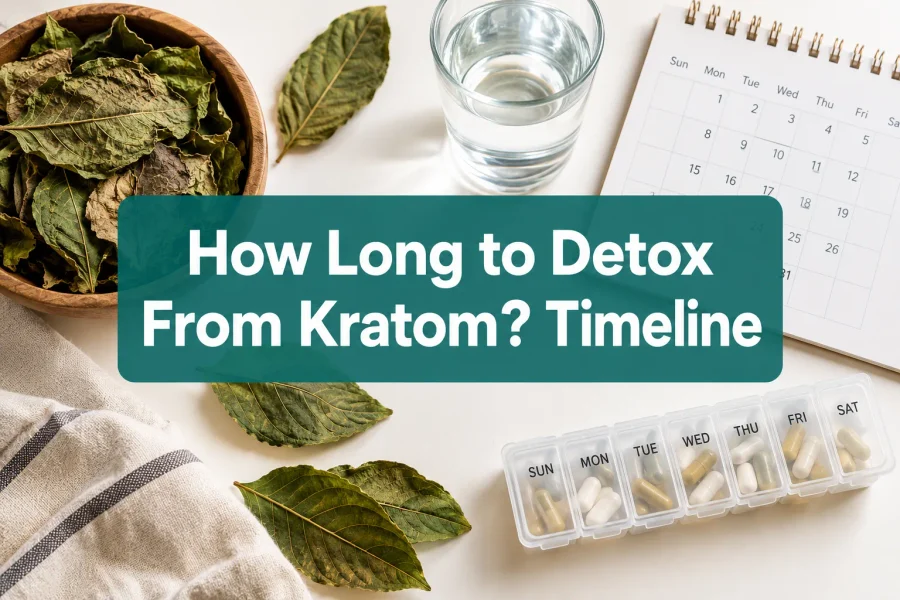
Most people asking how long to detox from kratom are looking at 7 to 14 days for acute physical withdrawal, with psychological symptoms stretching 2 to 4 weeks in heavier users. Onset hits within 6 to 12 hours of the last dose. The full timeline depends on how much you were taking, how long you used, and whether you taper or stop cold turkey.
- Acute kratom withdrawal lasts 7 to 14 days for most users, with peak symptoms at days 2 to 3
- Withdrawal onset starts 6 to 12 hours after the last dose [1]
- Psychological symptoms like anxiety and cravings can persist 2 to 4 weeks post-detox [4]
- Daily users taking more than 5 grams per dose face longer, more intense detox periods
- Tapering reduces severity significantly compared to stopping abruptly
- Kratom withdrawal is rarely life-threatening but is genuinely uncomfortable [2]
- Magnesium, hydration, and sleep support are the most consistently reported home aids
- Medical supervision is recommended for anyone using high doses daily for more than 6 months
- Mitragynine, kratom’s primary alkaloid, has a half-life of roughly 9 to 17 hours, which drives the withdrawal timeline [4]
- Recovery beyond detox requires addressing the psychological patterns that drove heavy use
What Is Kratom Withdrawal Like?
Kratom withdrawal feels similar to a mild opioid withdrawal combined with a severe flu. That’s not an exaggeration. Mitragynine and 7-hydroxymitragynine bind to opioid receptors, so when you stop, the nervous system reacts the way it does when opioids are removed [4].
The physical side hits first: muscle aches, sweating, runny nose, nausea, and insomnia. Then the psychological layer follows: anxiety, irritability, low mood, and strong cravings. Users report the psychological piece as harder to manage than the physical symptoms, especially past day 5 [2].
The intensity scales directly with dose and duration. Someone taking 2 to 3 grams occasionally will have a mild experience. Someone taking 15 to 20 grams daily for two years will have a significantly harder time.
Jack Botanicals - America's Trusted Kratom Source
AKA certified quality featuring Red Maeng Da, Red Bali, and Green Maeng Da. Lab-tested purity you can trust.
🎁 NEW CUSTOMER SPECIAL
JACK30 = 30% OFF
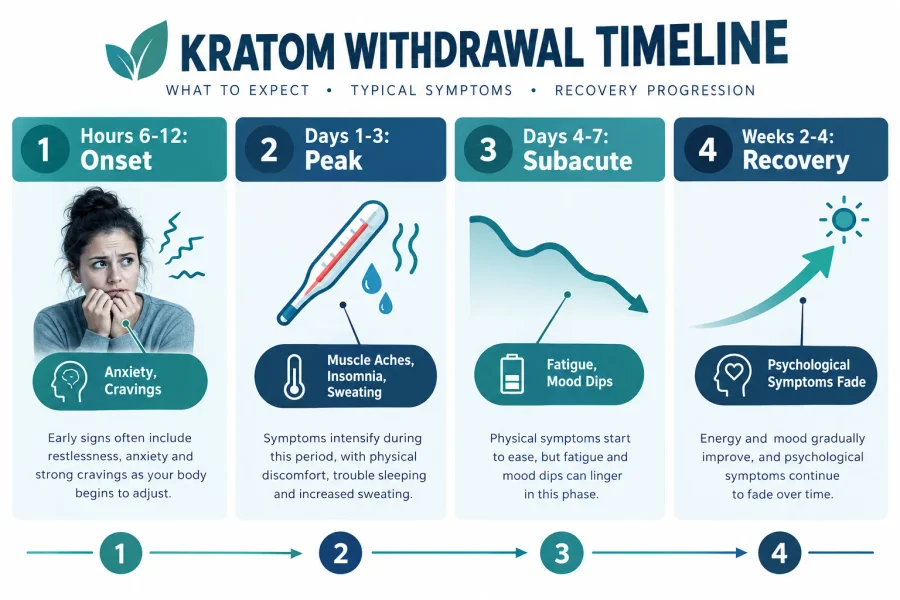
How Long Does Kratom Detox Take? The Full Timeline
Here’s the breakdown, phase by phase. Understanding how long to detox from kratom means tracking three distinct windows.
Phase 1: Onset (Hours 6 to 12)
Symptoms begin within 6 to 12 hours of the last dose. Early signs include restlessness, muscle tension, yawning, and anxiety. This phase catches many users off guard because it starts faster than expected.
Phase 2: Peak Withdrawal (Days 1 to 3)
This is the hardest stretch. Symptoms peak around 48 to 72 hours. Expect:
- Severe muscle aches and cramps
- Insomnia or severely disrupted sleep
- Hot and cold sweats
- Nausea, vomiting, or diarrhea
- Elevated heart rate and blood pressure
- Intense cravings
Phase 3: Subacute Phase (Days 4 to 7)
Physical symptoms start fading. Fatigue, mood instability, and appetite loss remain. Most users describe this as “the fog.” Energy is low, motivation is minimal, but the worst physical pain is behind them.
Phase 4: Psychological Tail (Weeks 2 to 4)
Anxiety, low mood, and intermittent cravings persist. This phase is where relapse risk is highest because the acute discomfort is gone but the psychological pull remains [4].
For a deeper look at how kratom clears the body during this process, the guide on how long kratom takes to get out of your system covers elimination rates in detail.
How Much Kratom Were You Taking Before Withdrawal Gets Bad?
Dose and frequency are the two biggest predictors of withdrawal severity. The pattern is consistent across user reports and clinical observations [6].
| Daily Dose | Duration of Use | Expected Withdrawal Severity |
|---|---|---|
| Under 3g | Less than 3 months | Mild, 3 to 5 days |
| 3 to 8g | 3 to 12 months | Moderate, 7 to 10 days |
| 8 to 15g | 1 to 2 years | Significant, 10 to 14 days |
| Over 15g | 2+ years | Severe, 14+ days, medical support advised |
Users taking high-potency extracts face an additional variable. A 1mL extract shot can deliver the equivalent of 10 to 15 grams of plain leaf powder. If you’ve been using extracts daily, your effective dose is likely higher than you think.
Understanding how long it takes to get addicted to kratom helps explain why even moderate daily use builds physical dependence faster than most users expect.
I Went Through Kratom Detox and Here’s What It Actually Took
Decided to take a full break from kratom about eight months ago after daily use for nearly a year. First 48–72 hours were the hardest — muscle aches, irritability, poor sleep, and low energy hit simultaneously. Acute withdrawal symptoms typically last 5–7 days for most regular users. Full detox including psychological cravings took me closer to 3–4 weeks before feeling genuinely normal.
Downsides: detox is significantly more uncomfortable than most kratom content online admits, tapering slowly over 2–3 weeks is far easier than stopping cold turkey, and post-acute symptoms like low mood and fatigue can linger weeks longer than expected. Professional support is worth considering for heavy long term users — this isn’t something to underestimate.
Best Way to Taper Off Kratom
Tapering is the most effective self-managed approach to kratom detox. The goal is reducing your dose gradually so the nervous system adjusts without full withdrawal shock [3].
Standard taper protocol:
- Calculate your current daily dose accurately (weigh it, don’t estimate)
- Reduce by 10% every 5 to 7 days
- If symptoms become severe, hold at the current dose for an extra week before cutting again
- Switch to powder from extracts early in the taper, extracts make precise dosing harder
- Do not compensate with alcohol or other substances during the taper
A 10% weekly reduction on a 12-gram daily habit looks like this:
- Week 1: 10.8g
- Week 2: 9.7g
- Week 3: 8.7g
- Week 4: 7.8g
At this rate, you reach under 3 grams in about 12 weeks. That final stretch from 3 grams to zero is usually the hardest psychologically, even though the physical dose is low [3].
For users who want to understand how long kratom’s effects last during a taper, the kratom duration effects guide explains how timing doses affects withdrawal gaps.
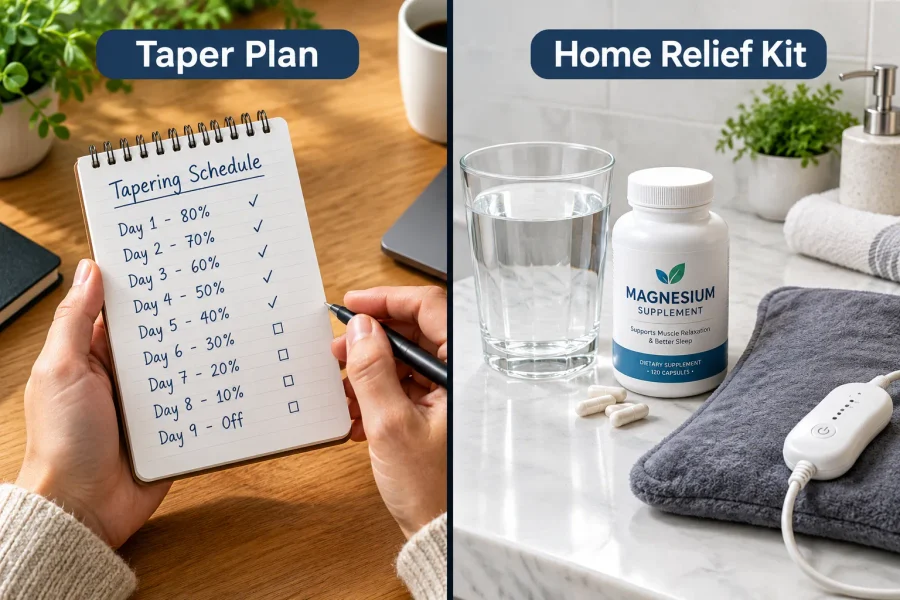
How to Manage Kratom Withdrawal Symptoms at Home
Most people asking how long to detox from kratom are also asking how to get through it. Here’s what actually works based on consistent user reports and clinical recommendations.
Physical symptom management:
- Hydration: Diarrhea and sweating cause significant fluid loss. Electrolyte drinks help more than plain water
- Magnesium glycinate: 300 to 400mg before bed reduces muscle cramps and improves sleep quality
- Hot baths or heating pads: Direct heat on aching muscles provides real relief
- Loperamide (Imodium): For diarrhea management at standard OTC doses only, do not exceed the label dose
- Melatonin: 3 to 5mg for sleep disruption during the first week
Psychological symptom management:
- Exercise: Even 20 minutes of walking accelerates mood recovery by supporting natural dopamine and serotonin production
- Routine: Fixed wake and sleep times reduce anxiety and cravings
- L-theanine: 200mg doses reduce anxiety without sedation for many users
- Support network: Telling one trusted person what you’re going through reduces relapse risk substantially
What doesn’t work:
- Using alcohol to sleep through withdrawal, it delays recovery and adds a second dependency risk
- High-dose supplements with no evidence base (large B12 megadoses, unproven “detox teas”)
- Kratom-based products marketed as “detox aids”, they simply restart the cycle [6]
Kratom Detox vs. Other Substance Withdrawals
Context matters here. Kratom withdrawal is real, but its risk profile differs from other substances [2].
Compared to opioids: Kratom withdrawal mirrors opioid withdrawal in symptom type but is generally less severe in intensity. Heroin or fentanyl withdrawal involves more extreme autonomic instability. Kratom withdrawal rarely requires IV fluids or emergency intervention [4].
Compared to alcohol: Alcohol withdrawal can be fatal due to seizure risk. Kratom withdrawal does not carry this risk. Medical detox is mandatory for alcohol dependence; it’s recommended but not always mandatory for kratom [2].
Compared to benzodiazepines: Benzo withdrawal is among the most dangerous of all substance withdrawals. Kratom withdrawal does not approach this severity.
Compared to caffeine: Caffeine withdrawal is milder. Kratom withdrawal, especially at high doses, is meaningfully more disruptive to daily functioning.
Bottom line: kratom withdrawal sits in a middle tier, more serious than caffeine, less medically dangerous than opioids or alcohol, but uncomfortable enough that most people need a plan to get through it.
Does Kratom Withdrawal Get Easier After a Few Days?
Yes, and the shift is noticeable. Days 1 through 3 are the hardest. By day 4 or 5, most users report that the acute physical symptoms begin declining.
The pattern that emerges consistently: physical symptoms peak and then drop off. Psychological symptoms plateau and linger. So the experience doesn’t get uniformly easier, it changes character. The body stops hurting as much, but the mind stays restless.
Users who make it to day 7 report that the worst is behind them physically. The challenge from that point is managing low energy, flat mood, and cravings without returning to kratom. This is where structured support, whether a counselor, an online community, or a close friend, makes a measurable difference [6].
For more detail on what the withdrawal window actually looks like week by week, the kratom withdrawal timeline and recovery guide tracks the full progression.
Kratom Detox Supplements That Actually Help
The results show a short list of supplements with consistent user-reported benefit. Most “detox” products don’t make this list.
Evidence-supported options:
- Magnesium glycinate (300 to 400mg): Muscle cramps and sleep
- Melatonin (3 to 5mg): Sleep onset during the first week
- L-theanine (200mg, 2x daily): Anxiety reduction without sedation
- Vitamin C (1,000mg daily): Antioxidant support; some users report reduced symptom intensity
- Black seed oil (nigella sativa): Anecdotally reported to reduce withdrawal intensity; limited formal research but consistent user reports
Supplements with weak or no evidence for kratom detox:
- Activated charcoal (does not meaningfully accelerate kratom clearance after the first hour post-dose)
- Milk thistle (liver support is fine generally but does not speed withdrawal)
- Most branded “kratom detox kits”, these are marketing, not medicine
How Long Before Kratom Leaves Your System Completely?
Mitragynine has a half-life of approximately 9 to 17 hours [4]. That means it takes roughly 2 to 9 days for the compound to clear the bloodstream. But “out of the bloodstream” is not the same as “fully recovered.”
The full picture on clearance:
- Blood: 2 to 9 days depending on dose and metabolism
- Urine: 5 to 7 days for moderate users; up to 14 days for heavy daily users
- Hair follicle: Up to 90 days (rarely tested for kratom)
Neurological recovery, meaning the opioid receptors returning to baseline sensitivity, takes longer than clearance. This is why cravings and mood disruption persist weeks after the compound is technically gone [4].
The detailed guide on how long kratom stays in your system covers detection windows and metabolism factors in full.
Why Is Kratom Withdrawal So Uncomfortable?
The mechanism is straightforward. Mitragynine and 7-hydroxymitragynine are partial agonists at mu-opioid receptors [4]. Regular use causes receptor downregulation, the brain reduces its own sensitivity to compensate for the constant stimulation.
When kratom is removed, the receptors are undersensitive and the brain’s natural endorphin system can’t compensate fast enough. The result is a rebound effect: pain sensitivity increases, mood regulation fails, sleep becomes difficult, and the autonomic nervous system goes into a hyperactive state (sweating, elevated heart rate, gastrointestinal distress) [2].
This is also why the psychological symptoms outlast the physical ones. Dopamine and serotonin pathways take longer to recalibrate than the acute opioid receptor rebound. Users who used kratom primarily for mood or anxiety management often find the psychological withdrawal harder than the physical phase [6].
Understanding how long kratom’s effects last also explains why the gap between doses gets shorter as dependence develops, the brain adapts faster than users expect.
How Long to Detox From Kratom – FAQs
How long does it take to detox from kratom?
The length of kratom detox varies based on factors such as how long someone has used it, how often it was taken, and individual differences. Some people notice changes within the first few days after stopping, while the overall adjustment period can last longer. There is no single timeline that applies to everyone.
How long do kratom withdrawal symptoms usually last?
Kratom withdrawal symptoms can vary in duration and intensity. Commonly reported timing may include:
- Symptoms may begin within a day or two after stopping.
- The first several days may involve the most noticeable changes.
- Symptoms may gradually become less noticeable afterward.
- Some people experience lingering changes for longer than a week.
Does the length of kratom use affect detox time?
Yes, duration and pattern of use can influence how long the adjustment period lasts. People who have used kratom frequently or for a longer period may experience a different timeline from occasional users. Amount, frequency, individual metabolism, and other personal factors can also contribute to differences in how quickly the body adjusts after stopping.
Can kratom detox be completed in one week?
Some people may experience substantial improvement within a week, but a one-week timeline is not guaranteed for everyone. The detox and adjustment period can differ according to previous use and individual factors. It is more accurate to view one week as a possible timeframe rather than a fixed point when detox is complete.
What factors can affect how long kratom detox takes?
Several factors may contribute to differences in the detox timeline, including:
- Length of time kratom was used.
- Frequency and amount of use.
- Individual metabolism and body differences.
- Whether use was consistent or occasional.
- Use of other substances that may affect the overall experience.
What happens during the first few days of kratom detox?
During the first few days after stopping kratom, some people report physical or emotional changes as their body adjusts. The experience can differ considerably between individuals. Reported changes may include restlessness, sleep disruption, sweating, stomach discomfort, or mood changes. The timing and intensity of these experiences are not the same for everyone.
When should someone seek professional help during kratom detox?
Professional guidance may be appropriate when stopping kratom becomes difficult to manage independently or when symptoms are concerning, severe, or persistent. Extra support can also be useful when kratom has been used frequently or alongside other substances. A qualified healthcare professional can consider the individual’s circumstances and provide appropriate guidance for stopping safely.
Conclusion
Here’s the deal: how long to detox from kratom depends on your dose, duration, and method. Acute withdrawal runs 7 to 14 days. Psychological symptoms can stretch 2 to 4 weeks. The peak is days 1 through 3, and it does get easier after that.
Tapering beats cold turkey for most users. Magnesium, hydration, exercise, and sleep support are the practical tools that actually move the needle. Medical supervision is not optional for heavy, long-term users.
The timeline is fixed by biology. What you control is preparation, symptom management, and what comes after detox. Address the reason you were using kratom in the first place, build a support structure before you stop, and treat the psychological tail as seriously as the physical phase.
For users still in the research phase, the how long does it take to detox from kratom safely guide provides a structured protocol with specific dosing and timing recommendations.
References
[1] Kratom Withdrawal Symptoms – https://atlantadetoxtreatment.com/2024/08/28/kratom-withdrawal-symptoms/
[2] Withdrawal – https://kratom.org/guides/side-effects/withdrawal/
[3] Tapering Off Kratom – https://www.ridgefieldrecovery.com/drugs/kratom/tapering-off-kratom/
[4] Kratom Withdrawal – https://www.healthline.com/health/kratom-withdrawal
[6] How To Quit Kratom – https://americanaddictioncenters.org/kratom/how-to-quit-kratom
David is an ethnobotany enthusiast who has spent years studying the role of plants in both ancient and modern communities. His curiosity has taken him from libraries filled with old manuscripts to landscapes where indigenous traditions still thrive. David enjoys connecting the dots between the past and present, showing how nature continues to inspire human life. His work emphasizes thoughtful exploration, cultural respect, and the joy of discovering connections in the natural world.