Premium Kratom - AKA Certified Quality
Red Maeng Da • Red Bali • Green Maeng Da - All lab-tested for purity
💰 EXCLUSIVE DISCOUNT
Code: JACK30 = 30% OFF
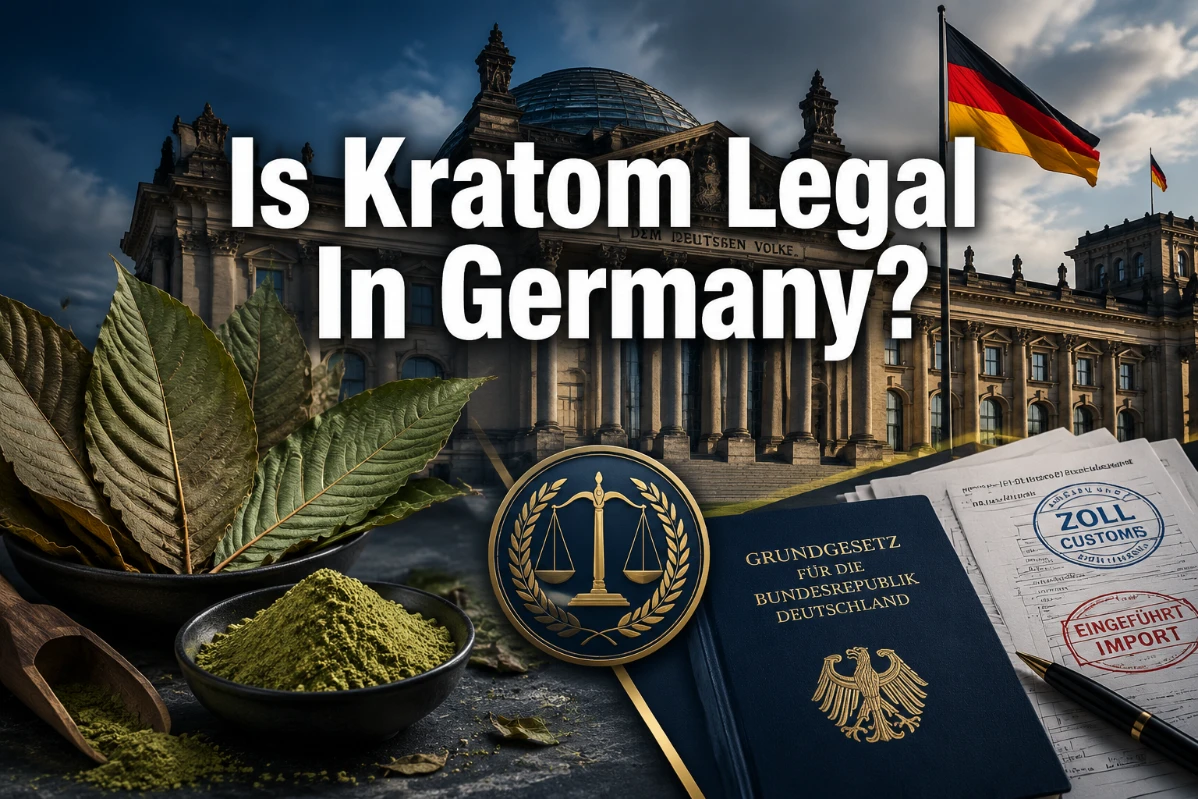
Kratom is not listed under Germany’s Narcotics Act (BtMG), so personal possession is not criminalized. However, selling kratom for human consumption is illegal because it lacks EU novel food authorization. Importing it commercially also puts buyers and vendors at serious legal risk. The situation is a legal grey zone — not a green light.
- Kratom is not a controlled narcotic under German law (BtMG), so possession alone carries no criminal penalty
- The EU classifies kratom as a novel food requiring authorization before sale — no authorization has been granted
- Selling kratom for human consumption in Germany is illegal and can result in up to 3 years imprisonment or a fine
- German customs actively seize kratom shipments intended for consumption
- The Federal Institute for Drugs and Medical Devices (BfArM) issued a formal warning against kratom use in July 2025
- No kratom preparation is approved as a medicinal product in Germany
- Vendors labeling kratom “not for human consumption” operate in a grey zone that authorities can still challenge
- Germany’s stance is stricter than the UK but less restrictive than countries like Australia or Thailand (historically)
- No individual German state has passed separate kratom legislation — federal rules apply uniformly
- Tourists carrying kratom into Germany face customs seizure risk even for personal amounts
What Exactly Is Kratom and Why Is It Controversial
Kratom (Mitragyna speciosa) is a tropical tree native to Southeast Asia. Its leaves contain two primary alkaloids — mitragynine and 7-hydroxymitragynine — that interact with opioid receptors in the brain. At low doses (1–5 grams), users report stimulant effects. At higher doses (5–15 grams), sedative and analgesic effects dominate.
The controversy comes from that opioid receptor activity. Kratom sits in an uncomfortable middle ground: not a traditional opiate, but not a benign herbal tea either. Dependence, withdrawal symptoms, and a handful of fatality reports (mostly involving polydrug use) have pushed regulators worldwide to act. Germany’s own consumer watchdog, the Verbraucherzentrale, describes kratom as carrying “erhebliches Risiko” — significant risk — and recommends against its use entirely [2].
The alkaloid profile varies by batch and strain. Mitragynine content typically ranges from 0.5% to 1.5% in dried leaf powder. That variability is part of why regulators find standardized safety assessment so difficult.
For a broader picture of how kratom’s legal status plays out across different jurisdictions, see this complete guide to kratom legal status by country and state.
Is Kratom Legal In Germany Under the Narcotics Act
Kratom is not listed in Germany’s Betäubungsmittelgesetz (BtMG), the federal Narcotics Act. That means possessing kratom for personal use is not a criminal offense under narcotics law [1].
Here’s the thing: “not illegal under the BtMG” does not mean “fully legal.” Germany has multiple legal frameworks that apply to kratom, and the narcotics classification is only one of them. The plant falls into a grey zone created by food law, medicinal product law, and customs regulations — all of which impose their own restrictions.
The breakdown of applicable German law:
Jack Botanicals - America's Trusted Kratom Source
AKA certified quality featuring Red Maeng Da, Red Bali, and Green Maeng Da. Lab-tested purity you can trust.
🎁 NEW CUSTOMER SPECIAL
JACK30 = 30% OFF
| Legal Framework | German Law | Kratom Status |
|---|---|---|
| Narcotics Act | BtMG | Not listed — possession not criminalized |
| Novel Food Regulation | EU 2015/2283 | No authorization granted — sale illegal |
| Medicinal Products Act | AMG (Arzneimittelgesetz) | Unapproved — marketing with health claims illegal |
| Food Safety Law | LFGB | Unsafe food — cannot be marketed |
Bottom line: you won’t face drug charges for having kratom in your pocket. But the moment money changes hands — for sale, import, or distribution — the legal exposure increases sharply [1].
Is Kratom Legal In Germany for Sale and Import
No. Selling kratom for human consumption in Germany is illegal under EU novel food regulations and the German Medicinal Products Act [1].
The EU Novel Food Regulation (EU 2015/2283) requires pre-market authorization for any food substance that was not widely consumed in the EU before May 1997. Kratom qualifies as a novel food. No application for kratom authorization has been approved by the European Food Safety Authority (EFSA). That makes commercial sale for consumption illegal across all EU member states, including Germany [2].
The penalties are not trivial. Selling kratom as an unauthorized medicinal product — which applies when health claims are made — can result in:
- Up to 3 years imprisonment or a fine for standard violations
- 1 to 10 years imprisonment for serious cases [1]
The workaround vendors use — labeling products “not for human consumption” or marketing them as botanical specimens — is a grey zone strategy. German authorities can still act if the marketing context makes the intended use obvious [1].

How German Customs Handle Kratom Imports
German customs actively enforce rules on kratom shipments. Packages intended for human consumption can be seized as unauthorized novel foods or unapproved medicinal products [1].
The enforcement pattern looks like this:
- Shipments labeled as “botanical specimens” or “not for human consumption” may pass through, but there is no guarantee
- Packages with obvious consumption labeling (dosage instructions, health claims) are high-risk for seizure
- Commercial quantities attract more scrutiny than small personal amounts
- Customs officers have authority to seize and destroy shipments without criminal charges being filed
Turns out, the “botanical specimen” label does not provide legal immunity. If customs determine the product is intended for consumption based on context — packaging, quantity, accompanying materials — they can act under food safety law regardless of the label.
For comparison, the US seized over 207,000 kratom packages in 2021 alone [2]. German enforcement is less publicized but follows similar logic under EU food law.
Kratom Legal Status Germany: My Research
I thoroughly investigated German kratom legislation approximately eight months ago while planning an extended European stay and wanting to continue my established 4-gram daily routine responsibly.
Germany’s kratom legal situation is genuinely complicated. Kratom currently occupies a regulatory gray area under German law — not explicitly scheduled as a controlled substance but frequently restricted under novel psychoactive substance frameworks and food safety regulations. Practically speaking, purchasing and possessing kratom in Germany carries meaningful legal uncertainty worth taking seriously.
German customs regularly intercepts kratom shipments, making importation particularly risky regardless of personal usage intentions. Local availability remains extremely limited compared to American markets.
Honest personal concern? Legal ambiguity creates genuine anxiety for regular users accustomed to straightforward legal access. Regulations surrounding kratom across European countries shift unpredictably requiring constant vigilant monitoring.
Consulting current local legal resources and potentially seeking professional legal guidance before traveling with kratom internationally remains my strongest personal recommendation for responsible users.
Can Tourists Bring Kratom Into Germany
Tourists face real customs risk when carrying kratom into Germany, even for personal use. While possession itself is not criminalized under the BtMG, customs can seize kratom at the border as an unauthorized novel food or unsafe food product [1].
The practical reality:
- No specific quantity threshold exists for “personal use” exemption under food law
- Airport customs officers have discretion to confiscate kratom without filing criminal charges
- Returning travelers from Southeast Asia (Indonesia, Thailand, Malaysia) are more likely to be checked
- Kratom in capsule or extract form looks more like a medicinal product and draws more scrutiny
The takeaway for tourists: leaving kratom at home is the safest option. Seizure is the most likely outcome if found, but in rare cases where health claims are attached to the product, further legal complications are possible.
Are There Legal Penalties for Kratom Possession in Germany
For simple personal possession, there are currently no criminal penalties under German narcotics law. Kratom is not a BtMG-listed substance [1].
However, context matters. If possession is connected to sale, distribution, or importation for commercial purposes, other laws apply with serious consequences:
- Selling unapproved medicinal products: up to 3 years imprisonment or fine
- Serious commercial violations: 1 to 10 years imprisonment [1]
- Food safety violations: administrative fines and product seizure
The German Federal Institute for Risk Assessment (BfR) has specifically warned that kratom preparations may be classified as unauthorized novel foods or unsafe foods, which prevents legal marketing [1]. That classification does not create a personal possession offense, but it does mean any commercial activity around kratom carries real legal exposure.
What German Medical Professionals and Regulators Say About Kratom
German regulators are not neutral on kratom. In July 2025, the Federal Institute for Drugs and Medical Devices (BfArM) issued a formal warning stating that kratom’s safety and efficacy have not been sufficiently tested, and that no kratom preparation is approved as a medicinal product in Germany [3].
The BfArM warning covers:
- Lack of clinical trial data supporting safe use
- Risk of dependence and withdrawal
- Dangerous interactions with other substances
- No approved therapeutic indication
The Verbraucherzentrale (Germany’s main consumer advice center) echoes this position, citing addiction potential and dangerous side effects as reasons to avoid kratom entirely [2]. German pharmacists and physicians generally align with this view — kratom is not part of any recognized treatment protocol in Germany.
Research use is theoretically possible under controlled conditions, but no German institution has publicly announced active kratom research programs as of 2026.
What Health Risks Should Users Know About Kratom
The health risks are real and documented. This is not marketing language — the pattern from adverse event reports and toxicology studies shows consistent concerns [2][3].
Key risks identified by German health authorities:
- Dependence and withdrawal: Regular use produces physical dependence. Withdrawal symptoms include muscle aches, insomnia, irritability, and nausea — similar to opioid withdrawal
- Liver toxicity: Case reports document hepatotoxicity in regular users
- Cardiovascular effects: Elevated heart rate and blood pressure reported
- Drug interactions: Kratom inhibits CYP enzymes, affecting metabolism of many medications
- Overdose risk: High doses combined with other CNS depressants (alcohol, benzodiazepines, opioids) have been linked to fatalities
- Variable potency: No standardized dosing exists — a “teaspoon” of one batch may contain 2x the alkaloids of another
The BfArM specifically flagged that the risk-benefit profile does not support medical use [3]. For users curious about withdrawal duration and what to expect, this kratom withdrawal timeline and recovery guide covers the process in detail.
How German Laws Differ From Other European Countries Regarding Kratom
Germany’s approach sits in the middle of the European spectrum. The EU novel food framework applies across all member states, but enforcement and additional national restrictions vary significantly.
Kratom Legal Status Across Europe (2026)
Filter by status to compare how Germany’s rules compare to other European countries.
| Country | Status | Key Rule | Possession Penalty |
|---|
Sources: legalclarity.org [1]; verbraucherzentrale.de [2]. Data current as of June 2026.
The comparison shows Germany occupies a grey zone alongside the Netherlands, Italy, and Austria. France banned kratom outright in 2020 as a narcotic. Sweden, Denmark, and Poland have full criminal penalties. The UK bans supply under the Psychoactive Substances Act but does not criminalize possession.
The common thread across Europe is the EU novel food rule — it applies everywhere in the EU. What differs is whether countries have added a narcotics or psychoactive substance classification on top of that. Germany has not done so as of 2026 [1].
For context on how kratom laws work in other non-EU countries, the kratom legal status in Australia article shows a much stricter approach, with kratom classified as a controlled substance requiring a prescription.
Are There Legal Loopholes for Kratom in Germany
The main loophole is the “not for human consumption” labeling strategy. Vendors sell kratom as botanical specimens, research material, or incense, avoiding the novel food and medicinal product classifications that trigger sale prohibitions [1].
Here’s the deal with this approach: it is not a genuine legal safe harbor. German authorities — including the BfR and BfArM — have explicitly stated they will look at the actual marketing context, not just the label. If a product is sold in dosage-sized sachets, with alkaloid percentages listed, alongside user testimonials about effects, the “not for human consumption” label will not protect the vendor [1].
The other grey area involves kratom sold for aromatherapy or as a tea ingredient. This is similarly fragile as a legal position.
What this means in practice:
- Personal possession remains unpunished, so users face minimal legal risk for having kratom at home
- Buying from overseas vendors who ship to Germany is legally ambiguous for the buyer but clearly risky for the vendor
- No German court has established clear precedent on exactly where the line falls for personal import quantities
The pattern across EU enforcement suggests regulators are more focused on commercial supply chains than individual users. But that can change, and the legal basis for action against personal importers already exists under food safety law.

Are There Alternative Legal Herbal Supplements Similar to Kratom in Germany
Yes. Several legal herbal supplements are available in Germany that users compare to kratom for energy, mood, or relaxation effects.
Legal alternatives sold openly in Germany:
- Kava (Piper methysticum): Legal as a food supplement in Germany; used for anxiety and relaxation. Liver toxicity concerns led to temporary restrictions, but it is currently available with quality controls
- Valerian root: Widely available; used for sleep and mild anxiety
- Ashwagandha: Legal adaptogen; used for stress reduction
- Rhodiola rosea: Legal; used for fatigue and cognitive performance
- Blue lotus (Nymphaea caerulea): Legal in Germany; mild sedative properties
- Passionflower (Passiflora incarnata): Available as tea and supplement; mild anxiolytic
None of these replicate kratom’s opioid receptor activity. Users looking for pain relief or opioid withdrawal support will find the pharmacological profile of these alternatives significantly different. German physicians can prescribe approved medications for those use cases.
Is Kratom Banned or Restricted in Specific German States
No. Germany does not have state-level kratom legislation. The federal framework — BtMG, AMG, and EU food law — applies uniformly across all 16 Bundesländer (federal states) [1].
This contrasts with the United States, where individual states like Alabama and Indiana have passed their own kratom-specific laws. Germany’s federal legal structure means there is no “kratom-friendly” state to exploit within the country.
Enforcement intensity may vary by region — customs activity is higher at major international airports like Frankfurt and Munich — but the underlying legal rules are identical nationwide.
What Medical or Research Uses of Kratom Exist
No kratom preparation is approved for medical use in Germany or anywhere in the EU as of 2026 [3]. The BfArM has explicitly stated that kratom’s safety and efficacy have not been sufficiently tested to support any therapeutic indication [3].
Internationally, research has examined kratom for:
- Opioid withdrawal management (observational studies, no controlled trials)
- Chronic pain (anecdotal reports, no approved protocols)
- Depression and anxiety (preclinical data only)
The research base is thin. Most published studies are observational or rely on self-reported data. The alkaloid 7-hydroxymitragynine is more potent than morphine at opioid receptors by some estimates, which creates both therapeutic interest and significant safety concern for regulators.
Germany’s BfArM position is that the current evidence does not justify medical use, and no clinical trials are underway in Germany as of 2026 [3].
Is Kratom Legal in Germany – FaQs
Is kratom legal in Germany?
Kratom is not specifically classified as an illegal substance under German narcotics law. However, its legal status can be complex because regulations may apply depending on how the product is marketed, imported, or sold. Laws and enforcement practices can change, so checking current regulations is important.
Can you buy kratom in Germany?
Kratom products may be available through certain vendors, but availability can vary. Factors that may affect access include:
- Import regulations
- Product classification rules
- Seller policies
- Changes in local enforcement practices
Can kratom be imported into Germany?
Importing kratom into Germany may involve customs and regulatory review. Even when a substance is not specifically prohibited, authorities may assess products based on their intended use, labeling, or applicable consumer regulations. Import requirements can change, so travelers and consumers should verify current rules before shipment.
Is kratom regulated as a medicine in Germany?
German authorities may evaluate products differently depending on how they are presented or marketed. Relevant considerations can include:
- Product labeling
- Intended purpose
- Advertising claims
- Applicable consumer protection rules
Can travelers bring kratom into Germany?
Travelers should exercise caution when carrying kratom into Germany. Customs officials may review products entering the country, and requirements can differ depending on the circumstances. Because border regulations may change over time, it is advisable to confirm current customs guidance before traveling.
Has Germany banned kratom nationwide?
Germany has not traditionally treated kratom as a substance covered by its main narcotics legislation. However, legal interpretations and regulatory approaches may evolve. The absence of a nationwide narcotics ban does not automatically determine how a product may be sold, imported, or marketed within the country.
What should consumers know about kratom laws in Germany?
Consumers should understand that legal status can depend on multiple factors, including:
- Current national regulations
- Import and customs requirements
- Product classification
- Seller compliance practices
- Regulatory updates over time
Conclusion
Is kratom legal in Germany? The honest answer is: it depends on what you mean by “legal.” Personal possession carries no criminal penalty under the BtMG. But selling, importing commercially, or marketing kratom for human consumption is illegal — and the penalties for commercial violations are serious, running up to 10 years imprisonment in aggravated cases [1].
The EU novel food framework is the primary barrier. Until EFSA grants authorization for kratom as a food ingredient — which has not happened and shows no signs of happening soon — the commercial supply chain remains legally blocked across Germany and the EU.
The BfArM warning from July 2025 signals that German regulators are paying attention and are not moving toward liberalization [3]. If anything, the regulatory direction points toward tighter enforcement, not relaxation.
For users already in Germany: possession risk is low, but sourcing is genuinely difficult through legal channels. For vendors or importers: the legal exposure is real and documented. The safest path is to monitor official BfArM and BfR updates, consult a German legal professional before any commercial activity, and treat the “grey zone” label as a warning, not an invitation.
For a broader view of how kratom laws compare across other jurisdictions, the complete state-by-state kratom legal guide provides updated coverage for 2026.
References
[1] Is Kratom Legal In Germany For Sale Or Personal Use – https://legalclarity.org/is-kratom-legal-in-germany-for-sale-or-personal-use/?utm_source=openai
[2] Kratom Erhebliches Risiko 27156 – https://www.verbraucherzentrale.de/wissen/lebensmittel/nahrungsergaenzungsmittel/kratom-erhebliches-risiko-27156?utm_source=openai
[3] Kratom Behoerde Warnt Vor Hohen Risiken Und Nebenwirkungen 1357097 – https://www.apotheken-umschau.de/medikamente/wirkstoffe/kratom-behoerde-warnt-vor-hohen-risiken-und-nebenwirkungen-1357097.html?utm_source=openai
Olivia is a writer who enjoys diving into the rich traditions surrounding plants and their place in everyday life. With an academic background in cultural studies and environmental history, she seeks to uncover stories that show the connection between nature and human resilience. Olivia’s perspective is rooted in curiosity and storytelling rather than instruction, encouraging readers to reflect on the timeless relationship people share with the natural world.