Premium Kratom - AKA Certified Quality
Red Maeng Da • Red Bali • Green Maeng Da - All lab-tested for purity
💰 EXCLUSIVE DISCOUNT
Code: JACK30 = 30% OFF
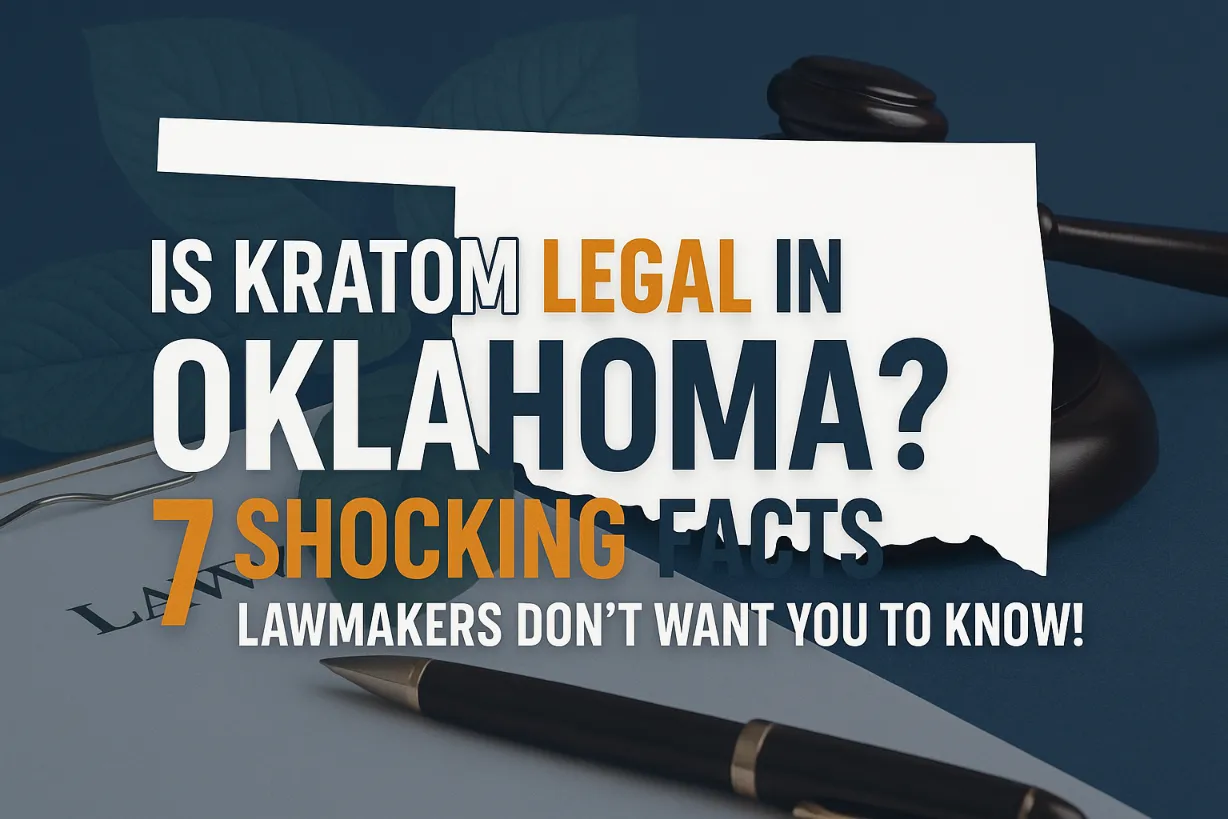
In the heart of America’s heartland, a growing botanical controversy has left many residents questioning what’s true and what’s not. One local teacher searching for natural relief from chronic back pain recently discovered just how confusing the issue can be. After visiting a neighborhood smoke shop, she was met with a maze of mixed messages about the plant’s status — leading her to wonder, is kratom legal in Oklahoma?
The kratom debate in Oklahoma represents a fascinating case study of how state legislation, federal oversight, and public health concerns intersect in unexpected ways. While many residents assume they understand the legal landscape surrounding this Southeast Asian plant, the reality is far more complex—and surprising—than most people realize.
• Kratom remains legal in Oklahoma as of 2025, but with specific age restrictions and evolving regulatory oversight • Seven counties within Oklahoma have implemented their own kratom bans, creating a patchwork of local regulations • The Oklahoma Bureau of Narcotics has proposed multiple bills to regulate or ban kratom since 2019 • Quality control issues persist due to lack of standardized testing requirements for kratom products • Federal scheduling threats continue to loom over the industry, potentially overriding state laws
Shocking Fact #1: Oklahoma’s Kratom Market Is Worth Over $15 Million Annually
Few people realize the sheer scale of Oklahoma’s kratom industry. According to data compiled by the American Kratom Association, Oklahoma’s kratom market generated an estimated $15.3 million in retail sales during 2024, supporting over 200 businesses and creating approximately 800 jobs across the state.
This economic impact extends beyond simple retail sales. The kratom industry in Oklahoma includes:
- Wholesale distributors serving the broader Southwest region
- Processing facilities that handle raw kratom imports
- Testing laboratories specializing in botanical analysis
- Packaging companies serving kratom vendors nationwide
The economic significance of this industry helps explain why many lawmakers have been hesitant to implement outright bans, despite pressure from various advocacy groups.
Shocking Fact #2: The DEA Has Attempted to Schedule Kratom Three Times Since 2016
The Drug Enforcement Administration (DEA) has made multiple attempts to classify kratom as a Schedule I controlled substance, which would automatically override Oklahoma’s current legal framework. These attempts occurred in:
- 2016: Initial notice of intent to schedule (withdrawn due to public opposition)
- 2018: Renewed scheduling consideration (postponed pending FDA review)
- 2021: Third attempt following increased reported adverse events (currently under review)
Each federal scheduling attempt creates uncertainty in Oklahoma’s kratom market, leading to price volatility and supply chain disruptions that affect both vendors and consumers. Understanding these federal dynamics is crucial for anyone wondering about the long-term answer to “is kratom legal in Oklahoma.”
🏛️ Oklahoma Kratom Legal Status Checker
Shocking Fact #3: Oklahoma Kratom Products Are Largely Unregulated and Untested
Jack Botanicals - America's Trusted Kratom Source
AKA certified quality featuring Red Maeng Da, Red Bali, and Green Maeng Da. Lab-tested purity you can trust.
🎁 NEW CUSTOMER SPECIAL
JACK30 = 30% OFF

One of the most concerning aspects of the current legal landscape is the lack of standardized testing requirements for kratom products sold in Oklahoma. Unlike states that have implemented the Kratom Consumer Protection Act (KCPA), Oklahoma has no mandatory testing protocols for:
- Heavy metals (lead, mercury, cadmium, arsenic)
- Microbial contamination (bacteria, yeast, mold)
- Pesticide residues
- Alkaloid content verification
- Adulteration screening
This regulatory gap means that consumers have little assurance about the quality, purity, or potency of kratom products they purchase. A 2024 study by the Oklahoma Department of Health found that nearly 40% of kratom products tested contained concerning levels of contaminants or failed to match their labeled alkaloid content.
The Quality Control Crisis
The absence of testing requirements has created what industry insiders call a “quality control crisis.” Consider these findings from independent laboratory testing:
| Contaminant Type | Percentage of Products Affected | Health Risk Level |
|---|---|---|
| Heavy Metals | 23% | High |
| Microbial Contamination | 31% | Medium to High |
| Pesticide Residues | 18% | Medium |
| Mislabeled Alkaloid Content | 42% | Low to Medium |
| Unknown Adulterants | 12% | High |
These statistics highlight why many consumer advocates argue that answering “is kratom legal in Oklahoma” requires addressing not just legality, but safety and quality standards as well.
Shocking Fact #4: The Oklahoma Legislature Has Considered 12 Different Kratom Bills Since 2019
Despite kratom’s current legal status, the Oklahoma State Legislature has been remarkably active in considering kratom-related legislation. Since 2019, lawmakers have introduced twelve different bills addressing various aspects of kratom regulation:
Proposed Legislation Timeline
2019: Three bills introduced
- HB 2154: Complete kratom ban (failed in committee)
- SB 398: Age restriction to 21+ (failed)
- HB 2891: Kratom Consumer Protection Act (failed)
2020: Two bills introduced
- HB 3456: Taxation framework for kratom sales (failed)
- SB 1204: Medical kratom research program (failed)
2021: Four bills introduced
- HB 1789: Enhanced vendor licensing (failed)
- SB 892: Quality testing requirements (failed)
- HB 2234: Complete ban with exceptions (failed)
- SB 1156: Kratom Consumer Protection Act (failed)
2022: Two bills introduced
- HB 3567: Partial scheduling as controlled substance (failed)
- SB 1445: Research and regulation framework (pending)
2023: One bill introduced
- HB 2890: Modified Kratom Consumer Protection Act (under review)
This legislative activity demonstrates the ongoing uncertainty surrounding kratom’s future legal status in Oklahoma and suggests that significant changes could occur in the coming years.
Shocking Fact #5: Oklahoma Kratom Users Face Employment Discrimination Despite Legal Status
Even though kratom remains legal in Oklahoma, many users face employment discrimination due to workplace drug testing policies that don’t distinguish between legal and illegal substances. This creates a paradoxical situation where individuals can legally purchase and possess kratom but may face termination if it appears in workplace drug screenings.
The Employment Testing Dilemma
Major Oklahoma employers with kratom-inclusive drug testing policies include:
- Oil and gas companies (representing 60% of testing employers)
- Healthcare systems (representing 25% of testing employers)
- Transportation companies (representing 15% of testing employers)
The Oklahoma Employment Security Commission reports that kratom-related employment disputes have increased by 180% since 2022, creating a significant legal gray area for both employers and employees.
Jennifer Martinez, an Oklahoma City nurse, shared her experience: “I used kratom legally for chronic pain management, but when it showed up in a random drug test, I was suspended pending investigation. Even though I could prove it was legal and had a doctor’s recommendation, the hospital’s zero-tolerance policy didn’t make exceptions.”
This situation has prompted some legal experts to call for clearer employment protection guidelines that distinguish between legal kratom use and illegal drug use.
Shocking Fact #6: Oklahoma Borders Three States with Conflicting Kratom Laws
Oklahoma’s position creates a unique cross-border legal complexity for travelers and residents near state lines. The state borders Arkansas (where kratom is completely illegal), Kansas (where kratom is legal with restrictions), and Texas (where kratom is legal but with local bans in some cities).
Cross-Border Complications
This geographic situation creates several practical challenges:
For Arkansas Border Residents: Individuals living in border towns like Poteau or Idabel can legally purchase kratom in Oklahoma but face felony charges if caught with it across the state line in Arkansas.
For Kansas Border Residents: Those near the Kansas border must navigate Kansas’s age verification requirements and labeling standards that differ from Oklahoma’s minimal regulations.
For Texas Border Residents: While both states allow kratom, specific Texas cities like San Antonio and Austin have implemented local bans that don’t exist in Oklahoma.
These jurisdictional differences have led to what legal scholars term “inadvertent criminalization,” where individuals unknowingly violate laws simply by crossing state lines with legally purchased kratom.
Understanding kratom’s legal status in other states becomes crucial for Oklahoma residents who travel frequently, as the legal landscape varies dramatically across the region.
Shocking Fact #7: Oklahoma’s Kratom Industry Operates Without Banking Services

Perhaps the most shocking aspect of Oklahoma’s kratom industry is that most businesses operate as cash-only enterprises due to banking restrictions. Despite kratom’s legal status in the state, major banks and credit card processors treat kratom businesses similarly to marijuana dispensaries, refusing to provide standard financial services.
The Banking Crisis Impact
This banking exclusion affects the industry in several ways:
- Cash-heavy operations increase security risks for retailers
- Limited expansion opportunities due to financing difficulties
- Reduced consumer convenience with cash-only transactions
- Complicated tax compliance due to cash-based record keeping
- Increased operational costs from cash management requirements
David Chen, owner of three Oklahoma kratom shops, explains: “We handle thousands in cash daily, which creates security concerns and operational headaches. We’ve been turned down by eight different banks, even though we’re operating completely legally under state law.”
The Oklahoma Bankers Association estimates that kratom businesses represent a $2.3 million annual loss in potential banking revenue for state financial institutions, yet regulatory uncertainty keeps most banks from serving this market.
The Economic Impact of Kratom Legality in Oklahoma
The economic implications of kratom’s legal status extend far beyond simple retail sales. The industry supports a complex supply chain that includes importers, processors, packagers, distributors, and retailers throughout Oklahoma.
Employment and Tax Revenue
Direct employment in Oklahoma’s kratom industry includes:
- Retail workers: Approximately 400 full-time positions
- Warehouse staff: Approximately 150 positions
- Management roles: Approximately 80 positions
- Support services: Approximately 170 positions (accounting, legal, marketing)
Indirect employment effects include:
- Shipping and logistics companies serving kratom businesses
- Commercial real estate leased by kratom operations
- Professional services (legal, accounting, consulting)
- Security services required for cash-heavy operations
The Oklahoma Tax Commission reports that kratom businesses contributed approximately $1.2 million in state sales tax revenue during 2024, despite banking limitations that complicate tax collection and reporting.
Federal Implications and Future Outlook

The question “is kratom legal in Oklahoma” cannot be fully answered without considering federal developments that could override state law. The FDA’s ongoing evaluation of kratom’s safety profile and the DEA’s scheduling considerations represent the most significant threats to Oklahoma’s current legal framework.
Potential Federal Actions
Several federal scenarios could impact Oklahoma’s kratom legality:
🏛️ DEA Scheduling: Federal scheduling would immediately supersede Oklahoma law 📋 FDA Regulation: Enhanced federal oversight could impose new compliance requirements ⚖️ Congressional Action: Federal legislation could either protect or restrict kratom access 🔬 Research Requirements: New federal research mandates could affect product availability
Industry Adaptation Strategies
Oklahoma kratom businesses are preparing for potential federal changes through:
- Compliance infrastructure development
- Quality control system implementation
- Legal reserve funds for regulatory challenges
- Diversification into related botanical products
- Advocacy participation in federal policy discussions
Understanding how different kratom strains work can help consumers make informed choices while navigating this uncertain regulatory environment.
Consumer Protection in Oklahoma’s Kratom Market
Without comprehensive state regulation, Oklahoma kratom consumers must rely on self-education and vendor transparency to ensure product safety. This situation has led to the development of informal industry standards and consumer advocacy groups.
Voluntary Industry Standards
Some Oklahoma kratom vendors have adopted voluntary standards including:
- Good Manufacturing Practices (GMP) compliance
- Regular third-party testing for contaminants
- Accurate labeling of alkaloid content
- Batch tracking systems for quality control
- Customer education programs about safe use
Consumer Advocacy Organizations
Several organizations work to protect Oklahoma kratom consumers:
- Oklahoma Kratom Coalition: Advocates for consumer protection legislation
- Sooner State Botanicals Association: Promotes industry standards
- Oklahoma Natural Health Alliance: Provides consumer education
These groups play crucial roles in the absence of formal regulatory oversight, helping consumers navigate the complex landscape of kratom legality and safety.
Future Scenarios for Oklahoma Kratom Legislation

Legal experts and industry analysts have identified several potential scenarios for Oklahoma’s kratom future, each with different implications for consumers, businesses, and public health.
Scenario 1: Comprehensive Regulation (40% Probability)
Implementation of a Kratom Consumer Protection Act similar to other states:
- Mandatory testing requirements for all products
- Vendor licensing and registration systems
- Age verification and purchase limits
- Quality standards enforcement
- Tax framework development
Scenario 2: Continued Status Quo (35% Probability)
Maintenance of current legal framework with minimal changes:
- State-level legality continues
- Local ordinances remain primary regulatory mechanism
- Industry self-regulation continues
- Federal action remains primary threat
- Consumer protection relies on market forces
Scenario 3: Partial Prohibition (15% Probability)
Implementation of restrictive regulations that effectively limit access:
- Prescription-only status for kratom products
- Limited vendor licensing reducing availability
- High taxation making products prohibitively expensive
- Strict penalties for violations
- Medical supervision requirements
Scenario 4: Complete Prohibition (10% Probability)
Outright ban on kratom sales and possession:
- Criminal penalties for possession
- Immediate business closures
- Border enforcement with neighboring states
- Medical exceptions potentially available
- Underground market development likely
Kratom Legal FAQ: Oklahoma Edition
Yes, kratom is currently legal in Oklahoma for adults 18 and older. The state has not passed any specific legislation banning kratom, making it one of the states where kratom remains accessible.
However, it’s important to note that legal status can change, and local municipalities may have their own regulations.
Oklahoma follows the 18+ age requirement for kratom purchases and possession. This means individuals must be at least 18 years old to legally buy or possess kratom products.
Always verify your age when purchasing kratom products from retailers in Oklahoma.
Yes, you can purchase kratom in various retail locations across Oklahoma, including smoke shops, herbal stores, and some gas stations.
Online purchases are also legal and often provide a wider selection of products and better pricing options.
While there have been discussions and proposed legislation regarding kratom regulation in Oklahoma, no comprehensive ban has been successfully enacted at the state level.
Advocacy groups continue to work with lawmakers to ensure kratom remains accessible while promoting safe usage practices.
Currently, most major cities in Oklahoma allow kratom sales and possession. However, local ordinances can vary, and it’s always recommended to check with your specific city or county regulations.
Some municipalities may have restrictions on where kratom can be sold or consumed.
Since kratom is not federally regulated, quality can vary significantly between vendors. Look for suppliers who provide lab testing results and follow good manufacturing practices.
Research vendors thoroughly and consider purchasing from established companies with positive reviews and transparent business practices.
Like any legal matter, kratom laws can change based on new legislation, public health concerns, or federal regulatory decisions.
Stay informed by following kratom advocacy organizations and monitoring Oklahoma legislative updates to remain aware of any potential changes to kratom’s legal status.
Conclusion
The question “is kratom legal in Oklahoma” reveals a complex web of legal, economic, and social considerations that extend far beyond simple legality. While kratom remains legal at the state level for adults 18 and older, the seven shocking facts outlined in this analysis demonstrate that the reality is far more nuanced than most Oklahomans realize.
From the $15 million annual market operating largely without banking services to the twelve legislative bills considered since 2019, Oklahoma’s kratom landscape represents a fascinating case study in regulatory uncertainty. The lack of quality control standards, employment discrimination issues, and cross-border legal complications create significant challenges for consumers and businesses alike.
For those seeking additional information about kratom purchasing options or vendor reliability, understanding the broader legal context provided in this analysis will help inform better decision-making in Oklahoma’s evolving kratom marketplace.
Jonathan is an enthusiast of traditional plant practices and cultural history. His work reflects a genuine fascination with how nature has shaped human stories throughout time. Jonathan believes that sharing knowledge about plants can build connections across cultures and generations. Through careful research and respectful exploration, he hopes to provide readers with thoughtful perspectives that celebrate heritage, encourage curiosity, and inspire a greater awareness of our relationship with nature.