Premium Kratom - AKA Certified Quality
Red Maeng Da • Red Bali • Green Maeng Da - All lab-tested for purity
💰 EXCLUSIVE DISCOUNT
Code: JACK30 = 30% OFF
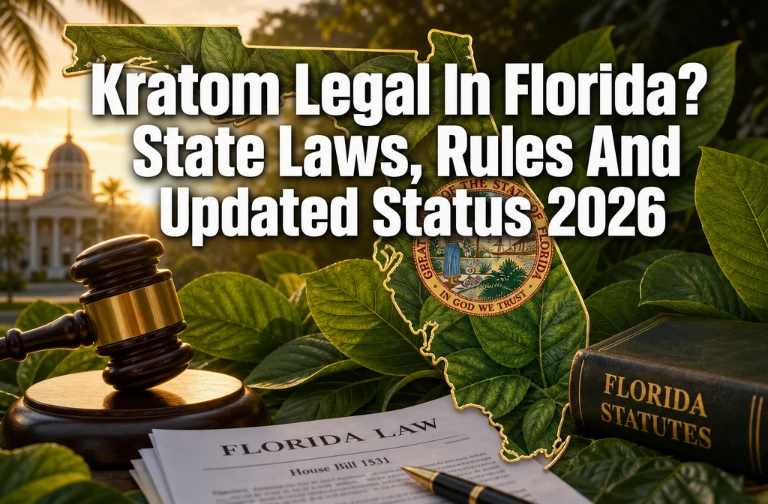
The answer to “is kratom legal” isn’t as straightforward as many would hope. While kratom remains federally legal in the United States as of 2026, the reality is far more nuanced. Six states have banned kratom entirely, while others have implemented age restrictions, labeling requirements, or are actively considering legislation. Meanwhile, the FDA continues to maintain its opposition to kratom, creating an ongoing tension between federal agencies and state-level acceptance
Federal Kratom Legal Status in 2026
Current Federal Position
At the federal level, kratom remains legal throughout the United States. The Drug Enforcement Administration (DEA) has not classified kratom’s primary alkaloids – mitragynine and 7-hydroxymitragynine – as controlled substances under the Controlled Substances Act. This means that kratom can be legally imported, manufactured, distributed, and possessed under federal law.
However, this federal legality comes with important caveats. The Food and Drug Administration (FDA) has consistently opposed kratom, issuing multiple warnings and import alerts since 2012. The FDA has:
- Issued warning letters to kratom vendors
- Seized kratom shipments at international borders
- Published consumer advisories against kratom use
- Stated that kratom has “no approved medical use”
The 2016 DEA Scheduling Attempt
The kratom community experienced a significant scare in August 2016 when the DEA announced its intention to place kratom in Schedule I of the Controlled Substances Act. This announcement triggered an unprecedented response from kratom advocates, researchers, and users.
Over 140,000 public comments flooded the DEA, with many sharing personal stories about kratom’s role in their lives. The American Kratom Association mobilized supporters, while researchers like Dr. Jack Henningfield and Dr. Walter Prozialeck provided scientific input challenging the DEA’s assessment.
In October 2016, the DEA took the unusual step of withdrawing its notice of intent, citing the need for additional public input and scientific review. This decision marked a turning point in kratom advocacy and demonstrated the power of organized public response.
Congressional Interest and Protection
Since 2016, several members of Congress have shown interest in protecting kratom access. Representatives like Mark Pocan (D-WI) and Matt Gaetz (R-FL) have advocated for kratom research and opposed scheduling efforts. In 2018, Congress included language in an appropriations bill encouraging the National Institute on Drug Abuse to study kratom’s potential benefits and risks.
State-by-State Kratom Laws
Jack Botanicals - America's Trusted Kratom Source
AKA certified quality featuring Red Maeng Da, Red Bali, and Green Maeng Da. Lab-tested purity you can trust.
🎁 NEW CUSTOMER SPECIAL
JACK30 = 30% OFF

States Where Kratom is Banned
As of 2026, six states have completely banned kratom:
🚫 Alabama – Kratom has been illegal since 2016 under the Alabama Controlled Substances Act. Possession can result in felony charges.
🚫 Arkansas – Banned kratom in 2016, classifying it as a Schedule I controlled substance. Violations carry serious criminal penalties.
🚫 Indiana – Prohibited kratom in 2014, making it one of the first states to ban the botanical. Both possession and distribution are illegal.
🚫 Rhode Island – Banned kratom in 2017, including it in the state’s controlled substances list.
🚫 Vermont – Prohibited kratom in 2016, with violations treated as controlled substance offenses.
🚫 Wisconsin – Banned kratom in 2014, classifying its primary alkaloids as controlled substances.
States with Age Restrictions
Many states have chosen regulation over prohibition, implementing age restrictions typically set at 18 or 21 years old:
Arizona – 18+ restriction with labeling requirements
Colorado – 21+ restriction implemented in 2022
Illinois – 18+ restriction with vendor licensing requirements
Minnesota – 18+ restriction with product testing mandates
Nevada – 18+ restriction with labeling requirements
New Hampshire – 18+ restriction
Utah – 18+ restriction with strict labeling and testing requirements
States with the Kratom Consumer Protection Act
The Kratom Consumer Protection Act (KCPA) represents the gold standard for kratom regulation. States that have passed the KCPA include:
- Florida – First state to pass KCPA in 2019
- Georgia – Enacted comprehensive KCPA in 2019
- Oklahoma – Passed KCPA with strong consumer protections
- South Carolina – Implemented KCPA with testing requirements
- Texas – Enacted KCPA with vendor licensing
The KCPA typically includes:
- Age restrictions (18+)
- Product testing requirements
- Labeling mandates
- Prohibition of adulterated products
- Vendor registration requirements
Local Ordinances and City Bans
Even in states where kratom is legal, local municipalities may implement their own restrictions. Cities that have banned kratom include:
- San Diego, California – City-wide ban despite state legality
- Jerseyville, Illinois – Local prohibition
- Sarasota County, Florida – County-level ban (later repealed)
Before purchasing kratom, it’s essential to verify both state and local laws in your area.
🌿 Kratom Legal Status Checker 2026
Understanding Different Kratom Strains and Their Legal Status
Popular Kratom Varieties
While the legal status of kratom generally applies to all strains, understanding the different varieties can help consumers make informed choices within legal frameworks:
Red Vein Strains like Red Hulu Kapuas and Red Vietnam are known for their relaxing properties and remain legal wherever kratom is permitted.
Green Vein Varieties such as Green Hulu Kapuas and Green Vietnam offer balanced effects and maintain the same legal status as other kratom products.
White Vein Strains including White Hulu Kapuas and White Vietnam are prized for their energizing qualities and share the same legal classification.
Specialty Strains like Gold Vietnam and Gold Hulu Kapuas undergo unique processing but remain subject to the same legal framework as other kratom products.
Form Factor Considerations
The legal status of kratom typically applies regardless of form:
Powder – The most common form, legal wherever kratom is permitted
Capsules – Encapsulated powder with identical legal status
Extracts – Concentrated forms that may face additional scrutiny
Teas – Prepared kratom beverages with same legal classification
Is Kratom Legal – FaQs
Is kratom legal?
Kratom legality depends on the country, state, or local jurisdiction. In some places it is permitted, while in others it may be restricted or banned. Laws can change over time, so legality is usually determined by current regional rules rather than a single global standard.
Is kratom legal in the United States?
- Federal law does not uniformly ban kratom
- Some states allow it without specific rules
- Other states or cities restrict or prohibit it
- Local ordinances can differ within the same state
Why is kratom legal in some places but banned in others?
Different regions assess kratom based on local policies, public discussions, and regulatory approaches. Some authorities choose restriction due to safety or monitoring concerns, while others allow access with few limits. This leads to inconsistent rules that vary widely between countries and even neighboring areas.
Can kratom laws change over time?
Yes, kratom laws can change as governments review new information or update regulations. A location where kratom is currently allowed may later introduce restrictions, or vice versa. Because of this, legality should be checked regularly using up to date official sources.
Is kratom legal to buy and sell online?
- Online availability depends on buyer location
- Sellers may limit shipping to certain regions
- Local laws can override online access
- Platform policies may restrict listings
Is kratom legal in Europe?
Kratom legality in Europe varies by country. Some European nations allow it under general consumer rules, while others restrict or ban it. There is no single European wide law covering kratom, so each country sets its own approach based on national regulations.
How can someone check kratom legality in their area?
- Review official government or health websites
- Check state or municipal regulations
- Look for recent legal updates or notices
- Confirm rules before purchasing or possessing
Conclusion
The question “is kratom legal” continues to evolve as we move through 2026, with the answer remaining both encouragingly positive and frustratingly complex. Kratom remains federally legal in the United States, a victory that seemed uncertain just a few years ago. However, the patchwork of state and local laws requires constant vigilance from consumers, advocates, and industry participants.
The success stories are compelling: states like Florida, Georgia, and Texas have demonstrated that sensible regulation through the Kratom Consumer Protection Act can protect consumers while preserving access. These models provide blueprints for other states considering kratom legislation, showing that prohibition isn’t the only option when addressing regulatory concerns.
References
- American Kratom Association – State-by-State Kratom Legality and Regulatory Status Guide
- Kratom Consumer Protection Alliance – Federal and Local Kratom Law Updates, 2026
- National Kratom Advocacy Coalition – Legal Framework for Mitragyna Speciosa in the United States
- Botanical Legal Defense Fund – Kratom Legislation Tracker and Compliance Standards
- Kratom Science and Research Institute – Regulatory History of Kratom in America
Jonathan is an enthusiast of traditional plant practices and cultural history. His work reflects a genuine fascination with how nature has shaped human stories throughout time. Jonathan believes that sharing knowledge about plants can build connections across cultures and generations. Through careful research and respectful exploration, he hopes to provide readers with thoughtful perspectives that celebrate heritage, encourage curiosity, and inspire a greater awareness of our relationship with nature.