Premium Kratom - AKA Certified Quality
Red Maeng Da • Red Bali • Green Maeng Da - All lab-tested for purity
💰 EXCLUSIVE DISCOUNT
Code: JACK30 = 30% OFF
The kratom legal map surrounding kratom continues to shift across the United States, creating a complex patchwork of regulations that can confuse even the most informed consumers. While kratom remains federally legal, individual states have taken drastically different approaches to regulating this botanical substance, ranging from complete bans to age restrictions and quality control measures.
Understanding the current legal status of kratom in your state is crucial for both consumers and businesses operating in this space. The regulatory environment changes frequently, with new legislation introduced regularly that can impact access, possession, and distribution of kratom products.
• Federal vs. State Laws: Kratom is federally legal but subject to varying state regulations across the country • Six States Have Bans: Alabama, Arkansas, Indiana, Rhode Island, Vermont, and Wisconsin have prohibited kratom completely • Age Restrictions Apply: Many states allow kratom but restrict sales to adults 18 or 21 years and older • Quality Standards Emerging: Several states have implemented the Kratom Consumer Protection Act for product safety • Regular Updates Needed: Legal status changes frequently, requiring ongoing monitoring of state legislation
Understanding the Federal Legal Framework
At the federal level, kratom remains legal under current regulations. The Drug Enforcement Administration (DEA) has not scheduled kratom as a controlled substance, despite considering such action in 2016. This federal position allows states to create their own regulatory frameworks for kratom products.
The Food and Drug Administration (FDA) has expressed concerns about kratom safety but has not taken action to ban the substance nationally. Instead, the FDA focuses on enforcement actions against companies making unsubstantiated health claims about kratom products.
This federal approach creates a state-by-state legal landscape that requires careful navigation for consumers and businesses alike. The American Kratom Association actively advocates for reasonable regulation and consumer protection at both federal and state levels.
Complete State-by-State Legal Analysis
States Where Kratom Is Completely Banned
Alabama 🚫 Alabama classified kratom alkaloids as controlled substances in 2016. Possession, sale, and distribution of kratom products are illegal throughout the state.
Arkansas 🚫 Arkansas banned kratom in 2016 under the Arkansas Controlled Substances Act. All kratom products are prohibited for sale and possession.
Indiana 🚫 Indiana prohibits kratom under state controlled substance laws. The ban includes all parts of the kratom plant and its alkaloids.
Rhode Island 🚫 Rhode Island enacted a kratom ban in 2017, making possession and sale of kratom products illegal statewide.
Vermont 🚫 Vermont classified kratom as a regulated drug in 2016, effectively banning its sale and possession.
Wisconsin 🚫 Wisconsin banned kratom in 2014, classifying it as a Schedule I controlled substance under state law.
States with Age Restrictions and Regulations
Many states allow kratom but impose age restrictions and quality control measures:
Arizona ✅ Arizona passed the Kratom Consumer Protection Act, requiring vendors to follow labeling standards and restricting sales to adults 18 and older.
Florida ✅ Florida allows kratom sales to adults 21 and older. The state has considered various regulatory measures but maintains relatively open access. You can find quality vendors like Florida Rooted Kratom operating within state guidelines.
Georgia ✅ Georgia permits kratom sales to adults 18 and older with proper labeling requirements.
Nevada ✅ Nevada enacted the Kratom Consumer Protection Act with age restrictions and quality standards for vendors.
Utah ✅ Utah requires kratom products to meet specific labeling and testing standards while restricting sales to adults.
States with Unrestricted Access
Several states maintain completely unrestricted access to kratom:
California ✅ California allows kratom sales without state-level restrictions, though some local municipalities may have their own rules.
Colorado ✅ Colorado permits kratom sales statewide without age restrictions or special regulations.
Kentucky ✅ Kratom remains legal in Kentucky without state-level restrictions on sales or possession.
New Jersey ✅ New Jersey allows kratom sales, and consumers can easily find kratom vendors in Jersey City and other locations throughout the state.
Texas ✅ Texas permits kratom sales without state-level age restrictions or quality control measures.
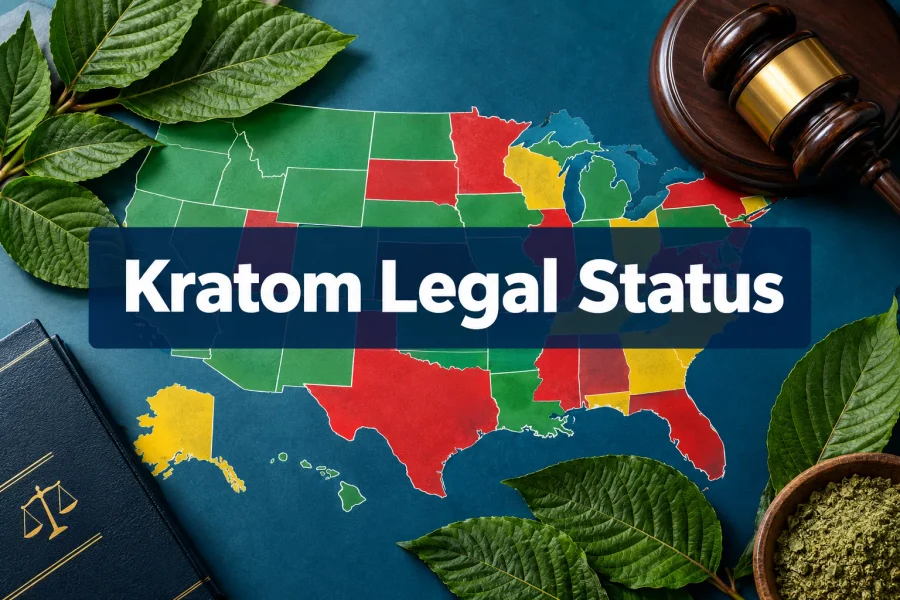
Interactive Kratom Legal Status Map
Regional Trends and Patterns
Jack Botanicals - America's Trusted Kratom Source
AKA certified quality featuring Red Maeng Da, Red Bali, and Green Maeng Da. Lab-tested purity you can trust.
🎁 NEW CUSTOMER SPECIAL
JACK30 = 30% OFF

Northeast Region
The Northeast shows mixed kratom policies. While states like New York and Massachusetts maintain open access, Vermont and Rhode Island have implemented complete bans. New Hampshire has adopted age restrictions for kratom purchases.
Southeast Region
Southern states demonstrate varying approaches to kratom regulation. Florida requires buyers to be 21 or older, while Alabama and Arkansas have banned kratom entirely. Georgia and North Carolina have implemented age restrictions with additional labeling requirements.
Midwest Region
The Midwest region shows significant variation in kratom laws. Wisconsin and Indiana have complete bans, while states like Ohio and Michigan maintain unrestricted access. Illinois has adopted age restrictions in most jurisdictions.
Western Region
Western states generally show more permissive attitudes toward kratom. California, Colorado, and Washington allow unrestricted access, while Arizona, Nevada, and Utah have implemented the Kratom Consumer Protection Act with age restrictions.
The Kratom Consumer Protection Act
The Kratom Consumer Protection Act (KCPA) represents a model regulatory framework that several states have adopted. This legislation aims to ensure product safety while maintaining consumer access to kratom.
Key KCPA Provisions:
Age Restrictions 🔞 Most KCPA legislation restricts kratom sales to adults 18 or 21 years and older, depending on the state.
Labeling Requirements 📋 Vendors must provide accurate labeling including alkaloid content, ingredients, and appropriate warnings.
Testing Standards 🧪 Products must be tested for contaminants including heavy metals, pesticides, and harmful bacteria.
Registration Requirements 📝 Vendors often must register with state authorities and comply with ongoing reporting requirements.
States that have enacted KCPA legislation include Arizona, Georgia, Nevada, Oklahoma, and Utah. These laws provide a framework that protects consumers while allowing legitimate businesses to operate.
Understanding Kratom Strains and Legal Considerations
Different kratom strains may face varying levels of scrutiny in different jurisdictions. Popular strains like Green Maeng Da and Bali Kratom are generally subject to the same legal restrictions regardless of strain type.
Specialty strains such as Green Sumatra and Gold Bentuangie fall under the same legal framework as other kratom products in each state.
Local and Municipal Regulations

Beyond state laws, consumers must consider local ordinances that may restrict kratom access:
City-Level Restrictions
Several cities have enacted their own kratom bans or restrictions, even in states where kratom remains legal at the state level. Examples include:
- San Diego, California: Age restrictions for kratom sales
- Jerseyville, Illinois: Local kratom ban despite state-level legality
- Sarasota County, Florida: Age verification requirements
County Regulations
Some counties have implemented kratom restrictions independent of state law:
- Union County, Mississippi: Local kratom ban
- Franklin County, New Hampshire: Age restrictions beyond state requirements
Safety and Quality Considerations
Regardless of legal status, kratom safety remains a primary concern for consumers and regulators. Understanding addiction potential helps inform both personal use decisions and regulatory approaches.
Quality Control Measures
Third-Party Testing 🔬 Reputable vendors provide third-party testing results for their products, regardless of legal requirements.
Good Manufacturing Practices ⚙️ Quality vendors follow GMP standards for production and packaging.
Proper Storage 📦 Products should be stored in appropriate conditions to maintain potency and prevent contamination.
Clear Labeling 🏷️ All products should include clear ingredient lists, dosage information, and appropriate warnings.
Finding Reputable Vendors
When kratom is legal in your state, choosing reputable vendors becomes crucial. Resources for finding the best places to buy kratom online can help consumers make informed purchasing decisions.
Quality vendors typically provide:
- Certificate of Analysis for each product batch
- Clear return and refund policies
- Responsive customer service
- Detailed product information
- Compliance with applicable regulations
Future Legal Trends and Predictions

Federal Regulation Possibilities
The FDA continues to monitor kratom and may eventually propose federal regulations. Potential federal actions could include:
- Scheduling decisions by the DEA
- FDA approval processes for kratom products
- National quality standards similar to dietary supplements
- Interstate commerce regulations
State-Level Developments
Several trends are emerging in state kratom legislation:
Increased KCPA Adoption 📈 More states are considering Kratom Consumer Protection Act legislation as a middle-ground approach.
Quality Control Focus 🎯 States are emphasizing product testing and labeling rather than outright bans.
Age Restriction Standards 🔞 Most new legislation includes age restrictions, typically 18 or 21 years old.
Vendor Registration 📋 States increasingly require vendor registration and compliance monitoring.
Staying Updated on Legal Changes
Kratom laws change frequently, making it essential to stay informed about current regulations:
Reliable Information Sources
State Legislature Websites 🏛️ Monitor your state legislature’s website for proposed kratom legislation.
American Kratom Association 🇺🇸 The AKA provides updates on federal and state kratom legislation.
Local News Sources 📰 Local news often covers proposed municipal kratom ordinances.
Legal Databases ⚖️ Professional legal databases provide comprehensive regulatory tracking.
Setting Up Alerts
Consider setting up Google Alerts for terms like:
- “Kratom legislation [your state]”
- “Kratom ban [your city]”
- “Kratom regulation updates”
Compliance for Businesses
Kratom businesses must navigate complex regulatory environments:
Multi-State Operations
Companies operating across state lines must comply with varying requirements:
Shipping Restrictions 📦 Businesses cannot ship to states where kratom is banned.
Age Verification 🔍 Companies must verify customer age in states with age restrictions.
Labeling Compliance 🏷️ Products must meet labeling requirements for each destination state.
Registration Requirements 📝 Businesses may need to register in states with vendor registration laws.
Record Keeping
Proper documentation helps ensure compliance:
- Batch tracking for all products
- Testing records and certificates of analysis
- Sales records with age verification
- Shipping logs to verify legal destinations
Kratom Legal Map – FaQs
What is a kratom legal map?
A kratom legal map is a visual reference that shows where kratom is allowed, restricted, or banned by law. It typically reflects state or country level rules and helps users quickly understand legal differences by location. These maps are informational and may change as laws are updated.
What information does a kratom legal map usually show?
- States or regions where kratom is legal
- Areas with full bans
- Locations with local or county restrictions
- Places with consumer protection laws
Are kratom legal maps always accurate?
Kratom legal maps aim to be accurate but may not always reflect the most recent legal changes. Laws can shift quickly due to local decisions or court rulings. Because of this, maps should be viewed as general guidance rather than a final legal authority.
Do kratom laws vary by state in the United States?
Yes, kratom laws in the United States vary by state and sometimes by city or county. While many states allow kratom, others restrict or ban it entirely. A kratom legal map helps highlight these differences, but local rules may still apply.
Can kratom be legal at the state level but banned locally?
- Some cities may prohibit kratom
- County rules can differ from state laws
- Local ordinances may override general access
What does it mean when a state is marked as restricted on a kratom legal map?
A restricted label usually means kratom is allowed with specific conditions rather than fully banned. These conditions can involve age limits, labeling standards, or consumer protection rules. The exact meaning depends on how each map defines restrictions.
Do kratom legal maps include federal law information?
Most kratom legal maps focus on state or local laws rather than federal rules. Kratom is not uniformly regulated at the federal level, so maps often highlight regional differences instead. Some maps may include notes about federal agency positions for context.
How often should a kratom legal map be updated?
- When state laws change
- After local bans or repeals
- When new regulations are passed
- Following major court decisions
Can a kratom legal map be used for travel planning?
A kratom legal map can help with general awareness when traveling, but it should not be the only source of information. Travelers should review local laws directly, especially when visiting cities or counties that may have their own restrictions.
Why do different kratom legal maps sometimes show different results?
Differences between kratom legal maps often come from update timing, source interpretation, or how restrictions are categorized. Some maps focus strictly on bans, while others include regulatory details. Comparing multiple sources can provide a clearer overall picture.
Conclusion
The kratom legal map reveals a complex landscape of state-by-state regulations that continues to evolve. While six states maintain complete bans, the majority of states allow kratom access with varying levels of regulation. The trend toward adopting the Kratom Consumer Protection Act suggests a future focused on quality control and consumer safety rather than prohibition.
Olivia is a writer who enjoys diving into the rich traditions surrounding plants and their place in everyday life. With an academic background in cultural studies and environmental history, she seeks to uncover stories that show the connection between nature and human resilience. Olivia’s perspective is rooted in curiosity and storytelling rather than instruction, encouraging readers to reflect on the timeless relationship people share with the natural world.