Premium Kratom - AKA Certified Quality
Red Maeng Da • Red Bali • Green Maeng Da - All lab-tested for purity
💰 EXCLUSIVE DISCOUNT
Code: JACK30 = 30% OFF
Hair loss can be devastating, but when it’s linked to a supplement you’ve been relying on for wellness, the shock hits even harder. Kratom, the Southeast Asian botanical that millions use for pain relief and mood support, has been increasingly connected to unexpected hair thinning and loss in users worldwide. Recent reports from kratom communities reveal a troubling pattern that demands serious attention.
• Kratom-related hair loss appears to be dose-dependent, with higher daily consumption increasing risk significantly • Nutritional deficiencies caused by kratom’s appetite-suppressing effects contribute to weakened hair follicles • Hormonal disruptions from long-term kratom use may trigger androgenic alopecia patterns • Stress on the liver from kratom metabolism can reduce protein synthesis needed for healthy hair growth • Recovery is possible with proper dosage management, nutritional support, and medical guidance
Understanding the Kratom-Hair Loss Connection
The relationship between kratom consumption and hair loss has emerged as one of the most concerning side effects reported by long-term users. While kratom (Mitragyna speciosa) offers legitimate benefits for pain management and mood enhancement, the botanical’s impact on hair health reveals a complex interplay of biological mechanisms.
Why does kratom cause hair loss? The answer lies in multiple pathways that affect hair follicle health, nutrient absorption, and hormonal balance. Unlike typical male pattern baldness or stress-related hair loss, kratom-induced hair thinning often presents unique characteristics that distinguish it from other forms of alopecia.
Research indicates that kratom’s primary alkaloids, mitragynine and 7-hydroxymitragynine, interact with opioid receptors in ways that can disrupt normal physiological processes essential for hair growth. These disruptions create a cascade of effects that ultimately compromise the hair growth cycle.
The Science Behind Kratom’s Effects on Hair Follicles
Alkaloid Interference with Cellular Processes
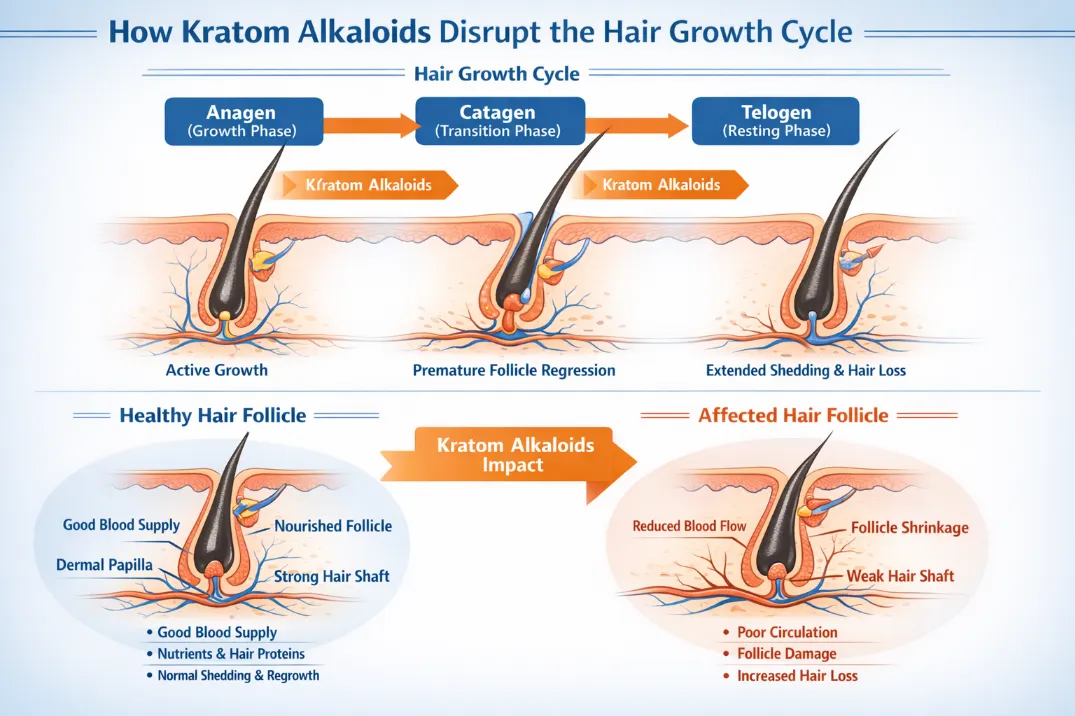
Kratom’s active compounds penetrate deeply into the body’s systems, affecting cellular metabolism at the follicular level. The hair growth cycle consists of three phases: anagen (growth), catagen (transition), and telogen (resting). Kratom alkaloids can prematurely shift follicles from the anagen phase to telogen, resulting in increased shedding and reduced new hair production.
Studies on opioid-receptor interactions suggest that chronic stimulation of these pathways can:
- Reduce blood flow to hair follicles
- Impair protein synthesis necessary for keratin production
- Disrupt the normal hair growth timeline
- Increase inflammation around follicle structures
Hormonal Disruption Mechanisms
Long-term kratom use appears to influence testosterone and dihydrotestosterone (DHT) levels in ways that mirror androgenic alopecia patterns. Users report hair loss concentrated at the crown and temples, similar to traditional male pattern baldness but occurring regardless of genetic predisposition.
The endocrine disruption occurs through:
- Hypothalamic-pituitary axis interference – Kratom’s opioid-like effects can suppress natural hormone production
- Increased cortisol levels – Chronic stress response activation damages hair follicles
- Thyroid function changes – Altered metabolism affects hair growth rates
- Insulin sensitivity modifications – Blood sugar irregularities impact nutrient delivery to follicles
Nutritional Deficiencies: The Hidden Culprit
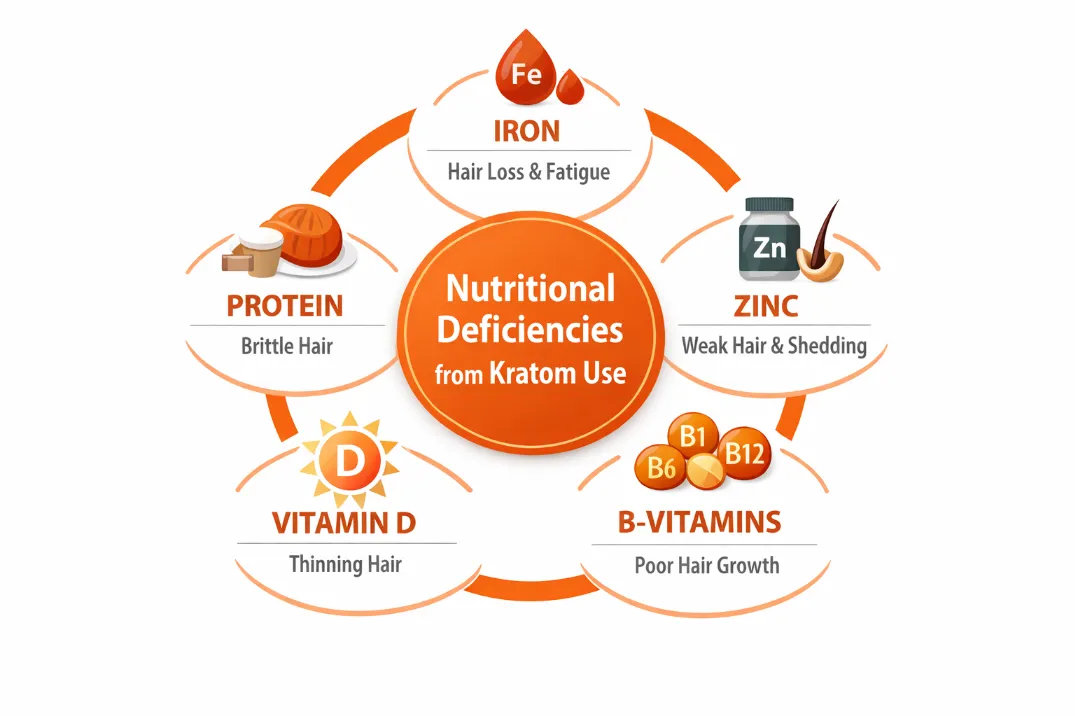
One of the most overlooked aspects of why kratom causes hair loss involves its impact on appetite and nutrient absorption. Many users experience appetite suppression as a side effect, leading to inadequate intake of essential vitamins and minerals crucial for hair health.
Critical Nutrients Affected by Kratom Use
Jack Botanicals - America's Trusted Kratom Source
AKA certified quality featuring Red Maeng Da, Red Bali, and Green Maeng Da. Lab-tested purity you can trust.
🎁 NEW CUSTOMER SPECIAL
JACK30 = 30% OFF
| Nutrient | Function for Hair Health | Kratom’s Impact |
|---|---|---|
| Iron | Oxygen transport to follicles | Reduced absorption due to digestive changes |
| Zinc | Protein synthesis and cell division | Depleted through increased urinary excretion |
| B-Complex Vitamins | Energy production in follicle cells | Decreased intake from appetite suppression |
| Protein | Keratin building blocks | Insufficient consumption affects hair structure |
| Vitamin D | Follicle cycling regulation | Reduced sun exposure and absorption issues |
The Malabsorption Factor
Kratom’s effects on the digestive system extend beyond appetite suppression. The plant’s compounds can alter gut bacteria composition and intestinal permeability, leading to malabsorption syndromes that prevent proper nutrient utilization even when dietary intake appears adequate.
Users following proper kratom dosage guidelines may still experience nutritional deficiencies if they don’t actively supplement their diet with hair-supporting nutrients.
Dosage Patterns and Hair Loss Severity
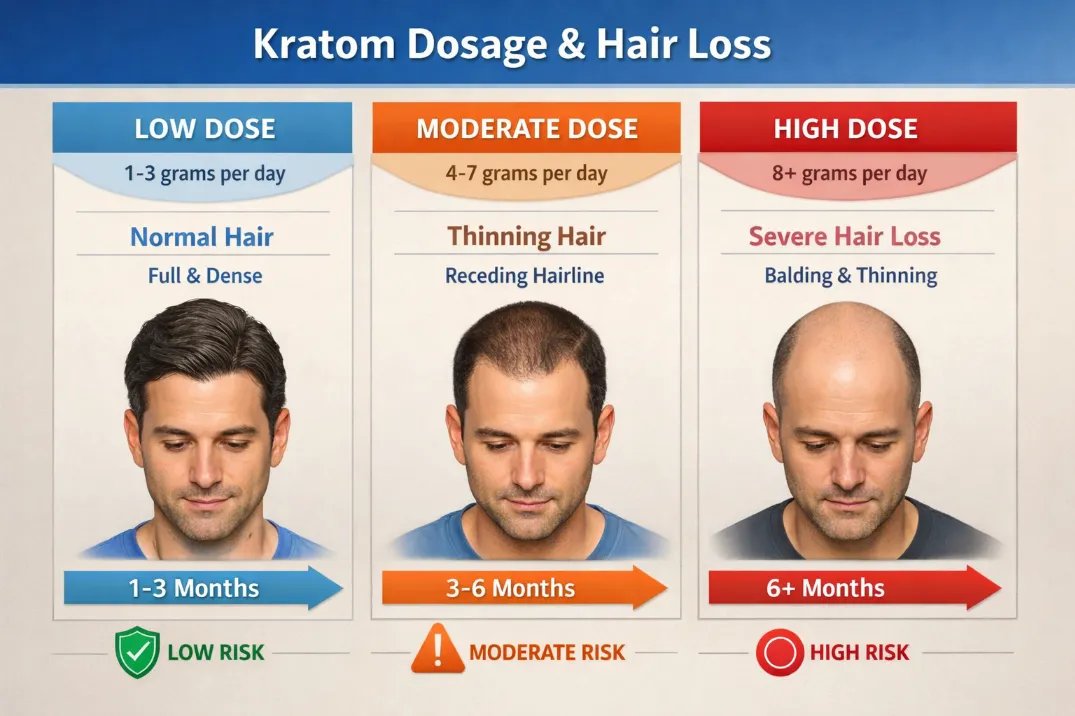
The relationship between kratom consumption patterns and hair loss severity shows clear dose-dependent characteristics. Understanding these patterns helps users make informed decisions about their kratom use.
Low-Dose Users (1-3 grams daily)
- Minimal hair loss reports
- Primarily stress-related thinning
- Reversible with proper nutrition
Moderate-Dose Users (4-8 grams daily)
- Noticeable thinning after 6-12 months
- Crown and temple recession patterns
- Requires active intervention to prevent progression
High-Dose Users (9+ grams daily)
- Significant hair loss within 3-6 months
- Diffuse thinning across entire scalp
- May require kratom cessation for recovery
Research from kratom user communities indicates that those consuming white strains like White Sumatra for energy may experience faster onset of hair loss symptoms compared to red strain users who typically consume lower daily amounts.
🌿 Kratom Hair Loss Risk Assessment Tool
Liver Function and Protein Synthesis
The liver plays a crucial role in both kratom metabolism and hair protein production. Why does kratom cause hair loss often relates to the increased metabolic burden placed on this vital organ. Chronic kratom use can lead to elevated liver enzymes and reduced efficiency in protein synthesis pathways essential for healthy hair growth.
Metabolic Stress Indicators
Signs that kratom may be affecting liver function include:
- 🔍 Fatigue despite adequate sleep
- 🔍 Digestive irregularities and appetite changes
- 🔍 Skin changes including dryness or yellowing
- 🔍 Dark urine or light-colored stools
- 🔍 Hair texture changes before visible loss occurs
When the liver becomes overwhelmed with kratom alkaloid processing, it prioritizes detoxification over non-essential functions like hair follicle support. This metabolic shift can persist for months even after kratom cessation, explaining why hair recovery often takes longer than expected.
Inflammatory Responses and Scalp Health
Chronic inflammation represents another pathway through which kratom contributes to hair loss. The immune system’s response to regular alkaloid exposure can trigger inflammatory cascades that directly damage hair follicles and surrounding tissue.
Cytokine Production and Hair Follicles
Research on opioid-receptor activation shows increased production of inflammatory cytokines including:
- TNF-alpha – Promotes follicle miniaturization
- Interleukin-1 – Disrupts hair growth cycles
- Prostaglandin D2 – Linked to androgenic alopecia patterns
These inflammatory mediators create a hostile environment for hair growth, leading to progressive follicle weakening and eventual hair loss. The inflammation often occurs systemically, affecting not just scalp health but overall wellbeing.
Gender Differences in Kratom Hair Loss
Men and women experience kratom-related hair loss differently, reflecting underlying hormonal and metabolic variations. Understanding these differences helps predict risk patterns and develop targeted prevention strategies.
Male Pattern Responses
Men typically experience:
- Crown and temple recession similar to androgenic alopecia
- Faster onset of visible symptoms (3-6 months)
- Higher correlation with dosage increases
- DHT-mediated follicle sensitivity enhancement
Female Pattern Responses
Women often show:
- Diffuse thinning across the entire scalp
- Slower progression but broader affected areas
- Hormonal cycle disruptions affecting hair growth
- Iron deficiency complications from appetite suppression
Women using kratom should pay particular attention to safe dosage recommendations as their metabolic processing of alkaloids differs significantly from men.
Strain-Specific Hair Loss Patterns
Different kratom strains appear to correlate with varying hair loss risks, though research remains limited. User reports suggest certain patterns worth considering when evaluating personal risk factors.
High-Risk Strains for Hair Loss
White and Green Strains typically associated with higher hair loss reports:
- More stimulating alkaloid profiles
- Higher typical dosage requirements
- Increased appetite suppression effects
- Greater stress hormone activation
Lower-Risk Strain Profiles
Red Strains generally report fewer hair loss incidents:
- More sedating alkaloid composition
- Lower average daily consumption
- Less appetite interference
- Reduced stress response activation
Users concerned about hair loss should consider rotating between different strains or focusing on red varieties that may pose lower risks to hair health.
Withdrawal and Hair Recovery Patterns
Understanding the timeline for hair recovery after kratom cessation helps users make informed decisions about continuing or discontinuing use. Recovery patterns vary significantly based on individual factors and usage history.
Immediate Post-Cessation Period (0-3 months)
- Continued shedding as damaged follicles complete their cycle
- Increased stress from withdrawal potentially worsening hair loss
- Nutritional rebound as appetite returns to normal
- Hormonal readjustment beginning to stabilize
Early Recovery Phase (3-6 months)
- Shedding reduction as new growth cycles begin
- Baby hair emergence in previously affected areas
- Texture improvements in existing hair
- Energy level recovery supporting overall health
Full Recovery Timeline (6-12 months)
- Significant regrowth in areas with viable follicles
- Density improvements across affected regions
- Normal growth patterns resuming
- Permanent changes becoming apparent in severely damaged areas
Important Note: Not all kratom-related hair loss is reversible. Follicles damaged beyond repair may require medical intervention or hair restoration procedures for recovery.
Prevention Strategies for Current Users
For those who choose to continue kratom use despite hair loss risks, several strategies can minimize damage and support hair health maintenance.
Nutritional Support Protocols
Essential Supplements for Hair Protection:
- Biotin Complex (5,000-10,000 mcg daily)
- Iron with Vitamin C (if deficient – test first)
- Zinc Picolinate (15-30 mg daily)
- B-Complex with active forms
- Collagen Peptides (10-20 grams daily)
- Omega-3 Fatty Acids (1,000-2,000 mg daily)
Dosage Management Techniques
- Rotating schedules to prevent tolerance and reduce total exposure
- Tapering protocols for high-dose users
- Strain rotation to minimize specific alkaloid accumulation
- Regular breaks to allow system recovery
Users should work with healthcare providers familiar with kratom to develop personalized protection protocols. Those purchasing from reputable vendors can better ensure product consistency for dosage management.
Medical Evaluation and Testing
Professional medical evaluation becomes essential when hair loss progresses beyond minor thinning. Healthcare providers can distinguish kratom-related hair loss from other conditions requiring different treatments.
Recommended Diagnostic Tests
| Test Category | Specific Tests | Purpose |
|---|---|---|
| Hormonal Panel | Testosterone, DHT, Thyroid Function | Identify hormonal disruptions |
| Nutritional Status | Iron, B12, Folate, Zinc, Vitamin D | Detect deficiencies |
| Liver Function | ALT, AST, Bilirubin, Protein Levels | Assess metabolic capacity |
| Inflammatory Markers | CRP, ESR, Cytokine Panel | Measure systemic inflammation |
| Scalp Analysis | Dermoscopy, Biopsy (if needed) | Evaluate follicle health |
When to Seek Immediate Medical Attention
Contact healthcare providers immediately if experiencing:
- Rapid hair loss (large amounts in short periods)
- Scalp pain, itching, or inflammation
- Systemic symptoms (fatigue, nausea, abdominal pain)
- Skin or eye yellowing (potential liver issues)
- Severe mood changes during hair loss progression
Treatment Options for Kratom-Related Hair Loss
Multiple treatment approaches exist for addressing kratom-related hair loss, ranging from conservative management to medical interventions.
Conservative Management Approaches
Topical Treatments:
- Minoxidil (2-5% solutions) for growth stimulation
- Essential oil blends (rosemary, peppermint) for circulation
- Scalp massage with carrier oils to improve blood flow
- Low-level laser therapy for follicle stimulation
Lifestyle Modifications:
- Stress reduction techniques (meditation, yoga)
- Sleep optimization for recovery support
- Exercise programs to improve circulation
- Hydration maintenance for cellular health
Medical Intervention Options
For severe cases, medical treatments may include:
- Finasteride (for DHT-related patterns)
- Corticosteroid injections (for inflammatory types)
- Platelet-rich plasma (PRP) therapy
- Hair transplantation (for permanent damage)
The choice of treatment depends on hair loss severity, underlying causes, and individual health factors. Those considering kratom addiction treatment should discuss hair loss concerns as part of comprehensive care planning.
Legal and Safety Considerations
The legal status of kratom varies by location, affecting access to both the substance and related medical care. Users should understand local regulations when seeking treatment for kratom-related health issues.
Regional Legal Variations
States and cities with specific kratom regulations may impact:
- Medical provider familiarity with kratom effects
- Insurance coverage for related treatments
- Access to specialized care for kratom-related issues
- Research participation opportunities
Users in areas like Nebraska or Las Vegas should verify current legal status before discussing kratom use with healthcare providers.
Safety Monitoring Protocols
Regular health monitoring becomes crucial for long-term kratom users, especially those experiencing hair loss:
- Monthly progress photos to document changes
- Quarterly blood work to monitor health markers
- Annual comprehensive examinations including scalp evaluation
- Immediate reporting of concerning symptoms
Alternative Approaches and Natural Remedies
Many users explore natural alternatives to support hair health while continuing kratom use or during recovery periods.
Herbal Support Options
Hair-Supporting Botanicals:
- Saw Palmetto – Natural DHT inhibition
- Horsetail Extract – Silica for hair strength
- Nettle Root – Anti-inflammatory properties
- Ginkgo Biloba – Circulation enhancement
- Ashwagandha – Stress hormone regulation
Dietary Interventions
Hair-Healthy Nutrition Focus:
- Protein-rich foods (lean meats, legumes, eggs)
- Iron sources (spinach, red meat, lentils)
- Healthy fats (avocados, nuts, fatty fish)
- Antioxidant foods (berries, green tea, dark vegetables)
These approaches work best as complementary strategies rather than standalone treatments for significant hair loss.
Why Does Kratom Cause Hair Loss – FaQs
Can kratom cause hair loss?
There is limited scientific evidence directly linking kratom to hair loss. Reports are mostly anecdotal, and hair shedding may be influenced by factors such as nutrition, stress, or hormonal changes rather than kratom itself.
Why do some users report hair thinning while using kratom?
Some users notice hair thinning due to secondary factors:
- Stress or anxiety levels
- Poor diet or nutrient deficiencies
- Changes in sleep patterns
- Individual sensitivity to kratom use
Does long-term kratom use increase hair loss risk?
Long-term kratom use may coincide with lifestyle changes that impact hair health. While there is no direct clinical evidence, prolonged use could indirectly influence hair condition through sleep disruption, dietary changes, or stress management.
Are certain kratom strains more likely to affect hair?
There is no scientific data suggesting specific strains cause hair loss. Effects are more likely related to individual response, overall health, and usage patterns rather than vein color or strain origin.
Can kratom affect hormones linked to hair growth?
Kratom may have mild effects on hormone regulation according to anecdotal reports, but no studies confirm a direct impact on hormones that control hair growth. Hair loss is usually caused by more established factors like genetics, nutrition, and stress.
How can hair loss be minimized while using kratom?
Maintaining hair health involves general wellness practices:
- Balanced diet with vitamins and minerals
- Proper hydration
- Managing stress effectively
- Regular sleep patterns
Is hair loss from kratom permanent?
There is no evidence that kratom causes permanent hair loss. Any shedding reported is likely temporary and associated with other factors. Hair growth usually resumes once underlying conditions, such as nutrient deficiencies or stress, are addressed.
Do dosage and frequency affect hair shedding?
High dosage or frequent kratom use may indirectly contribute to lifestyle changes that affect hair, such as fatigue or irregular eating habits. Hair loss is not a guaranteed result of higher intake but may correlate with these indirect effects.
Should I stop using kratom if I notice hair loss?
Before stopping, consider other potential causes of hair shedding, like diet, stress, or medical conditions. Consulting a healthcare professional can help determine the source and guide appropriate steps for maintaining hair health.
Are there any known supplements to support hair while using kratom?
Hair health may benefit from general nutrition rather than kratom-specific supplements. Common supportive measures include:
- Biotin or vitamin B supplements
- Iron or zinc if deficient
- Protein-rich foods
- Maintaining hydration and scalp care
Conclusion
The connection between kratom use and hair loss represents a serious health consideration that demands careful attention from users, healthcare providers, and researchers. Why does kratom cause hair loss involves complex interactions between alkaloid effects, nutritional deficiencies, hormonal disruptions, and metabolic stress that can significantly impact hair health over time.
David is an ethnobotany enthusiast who has spent years studying the role of plants in both ancient and modern communities. His curiosity has taken him from libraries filled with old manuscripts to landscapes where indigenous traditions still thrive. David enjoys connecting the dots between the past and present, showing how nature continues to inspire human life. His work emphasizes thoughtful exploration, cultural respect, and the joy of discovering connections in the natural world.