Premium Kratom - AKA Certified Quality
Red Maeng Da • Red Bali • Green Maeng Da - All lab-tested for purity
💰 EXCLUSIVE DISCOUNT
Code: JACK30 = 30% OFF
Imagine standing at airport security with your kratom powder, wondering if TSA agents will confiscate it or worse—wondering if you’ll face legal consequences. This scenario plays out daily as kratom users navigate the complex landscape of air travel regulations. With kratom’s legal status varying dramatically across states and countries, understanding travel rules becomes crucial for anyone who relies on this botanical supplement.
• Federal legality: Kratom remains federally legal in the United States, making domestic air travel generally permissible • State-specific bans: Several states prohibit kratom possession, making travel to these destinations illegal regardless of federal status • TSA guidelines: The Transportation Security Administration doesn’t specifically prohibit kratom, but proper packaging and labeling are essential • International restrictions: Many countries ban kratom entirely, making international travel with kratom extremely risky • Documentation importance: Carrying proper labeling and certificates of analysis can prevent complications during security screening
Understanding Kratom’s Federal Legal Status
The question “is it legal to fly with kratom” begins with understanding kratom’s federal classification. Currently, kratom (Mitragyna speciosa) remains legal at the federal level in the United States. The Drug Enforcement Administration (DEA) has not scheduled kratom as a controlled substance, despite considering such action in 2016.
This federal legal status means that flying with kratom domestically doesn’t violate federal transportation laws. However, this baseline legality comes with significant caveats that travelers must understand before packing their kratom products.
FDA Position on Kratom
The Food and Drug Administration maintains a cautious stance on kratom, issuing warnings about potential health risks while stopping short of federal prohibition. The FDA has:
- Issued import alerts for kratom products
- Warned against kratom use for medical purposes
- Seized contaminated products at borders
- Monitored adverse event reports related to kratom consumption
These actions don’t make kratom illegal but create regulatory uncertainty that affects travel considerations.
🌿 Kratom Travel Legality Checker
State-by-State Legal Variations
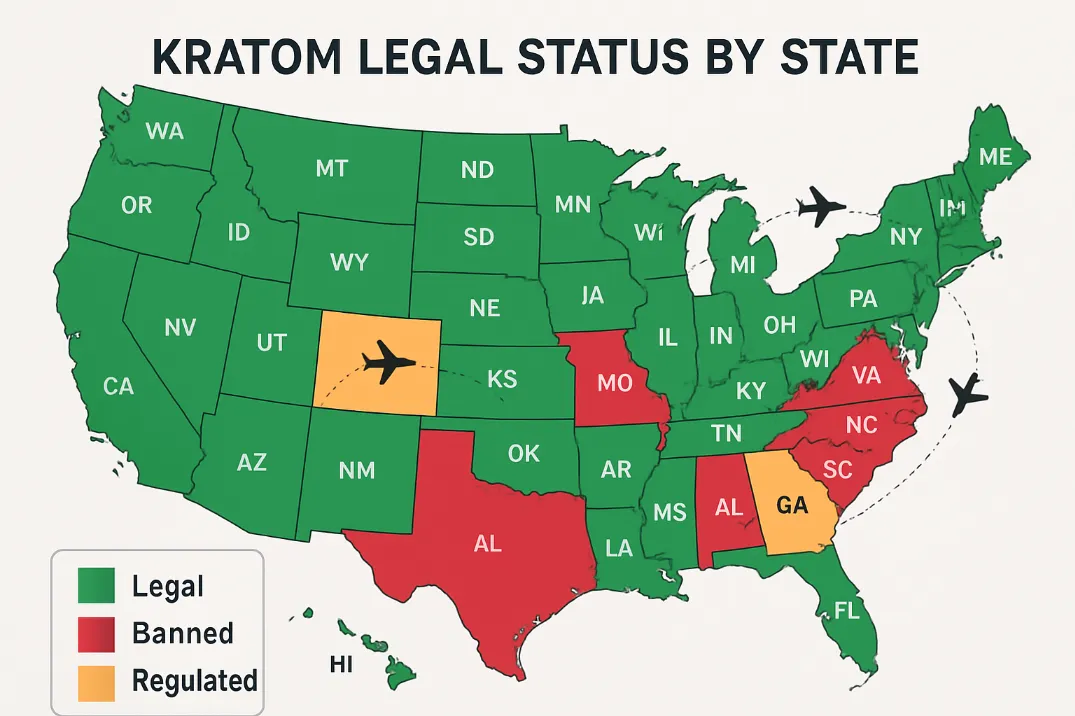
The complexity of determining whether it is legal to fly with kratom increases dramatically when considering state-level regulations. While federal law permits kratom, individual states maintain authority to ban or regulate the substance within their borders.
States Where Kratom Is Banned
Currently, these states prohibit kratom possession, sale, and use:
- Alabama (banned since 2016)
- Arkansas (banned since 2016)
- Indiana (banned since 2014)
- Rhode Island (banned since 2017)
- Vermont (banned since 2017)
- Wisconsin (banned since 2014)
Flying to or from these states with kratom violates state law, regardless of federal legality. Law enforcement in these states can arrest and prosecute individuals for kratom possession.
States with Kratom Regulation
Several states allow kratom but impose specific regulations:
Tennessee: Requires age restrictions and labeling requirements Nevada: Implements consumer protection standards Utah: Mandates product testing and age limits Georgia: Regulates kratom under consumer protection laws
Understanding current state laws regarding kratom legality becomes essential for safe travel planning.
Local Jurisdiction Considerations
Beyond state laws, local jurisdictions may impose additional restrictions. Cities and counties can:
- Ban kratom sales while allowing possession
- Implement age restrictions beyond state requirements
- Require business licensing for kratom vendors
- Impose zoning restrictions on kratom businesses
Travelers should research local ordinances at their destination, as specific state regulations like those in Alaska can vary significantly from general state policies.
TSA Guidelines and Airport Security
Jack Botanicals - America's Trusted Kratom Source
AKA certified quality featuring Red Maeng Da, Red Bali, and Green Maeng Da. Lab-tested purity you can trust.
🎁 NEW CUSTOMER SPECIAL
JACK30 = 30% OFF
The Transportation Security Administration doesn’t maintain specific policies prohibiting kratom transport. However, TSA agents follow federal guidelines and may detain suspicious substances for further inspection.
Carry-On vs. Checked Baggage
Carry-On Considerations:
- Powder substances may trigger additional screening
- TSA agents might request substance identification
- Delays can occur during manual inspection
- Original packaging helps verification
Checked Baggage Advantages:
- Less scrutiny during routine screening
- Reduced risk of travel delays
- Better for larger quantities
- Minimal passenger interaction required
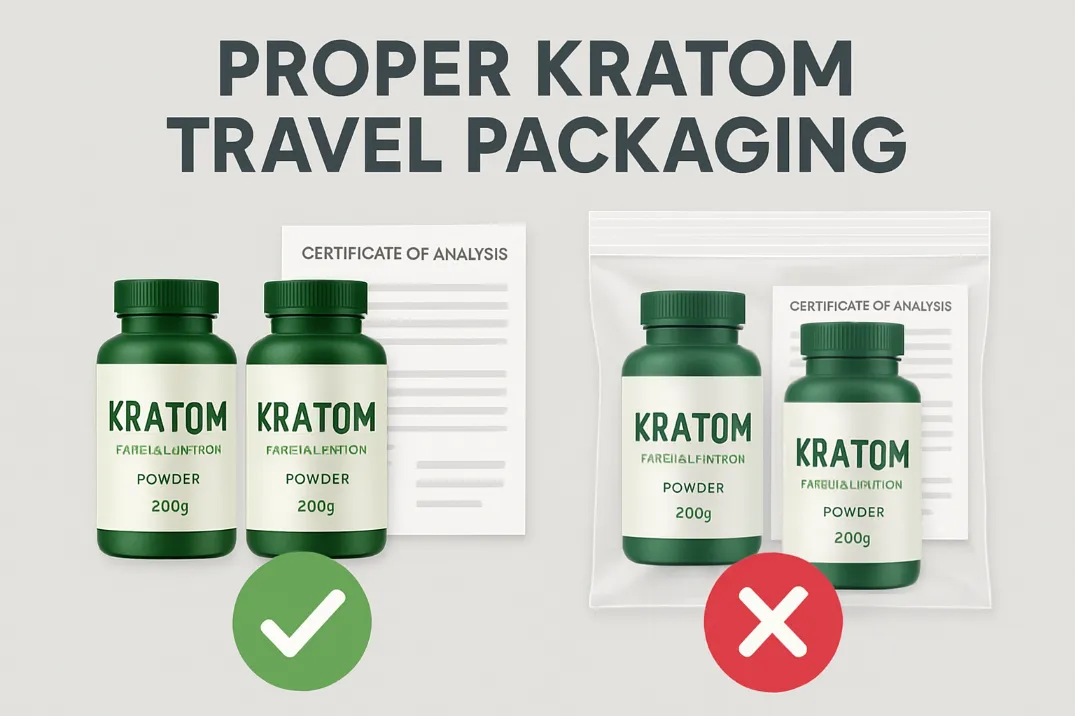
Proper Packaging Guidelines
To minimize complications when determining is it legal to fly with kratom, follow these packaging recommendations:
✅ Keep original manufacturer packaging ✅ Include certificates of analysis ✅ Use clear, labeled containers ✅ Separate different strains clearly ✅ Carry documentation of legal purchase
❌ Avoid unmarked bags or containers ❌ Don’t mix with other substances ❌ Avoid excessive quantities ❌ Don’t transfer to pill bottles
Documentation and Labeling Requirements
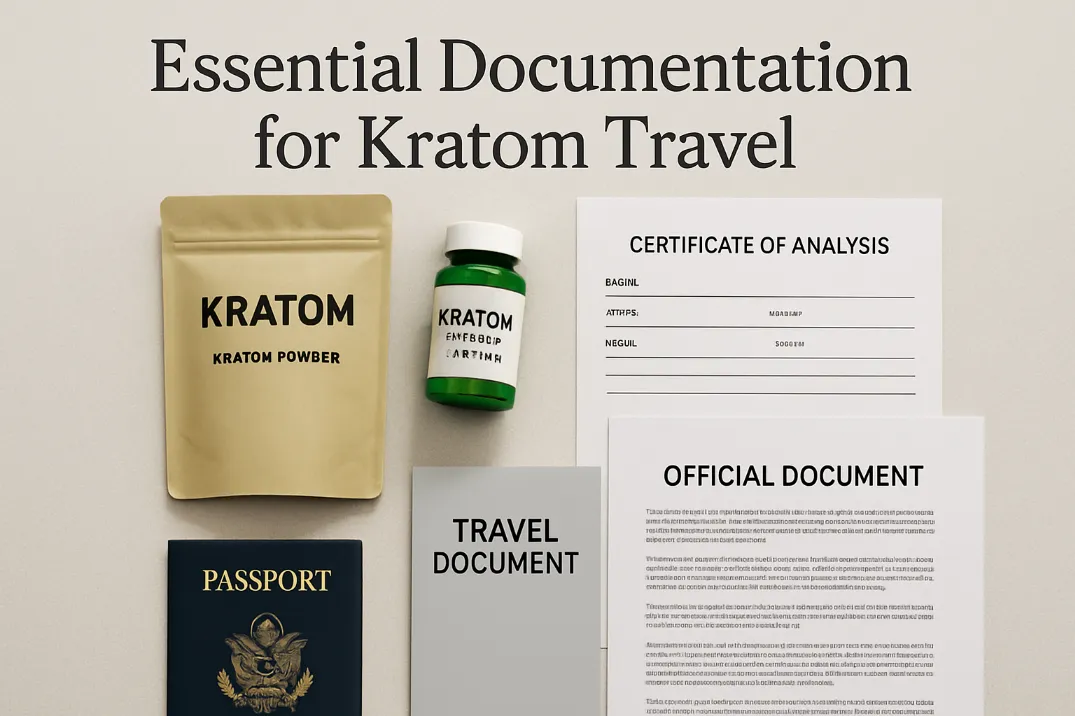
Proper documentation significantly reduces travel complications. Essential documents include:
Certificate of Analysis (COA)
A COA provides laboratory verification of:
- Alkaloid content (mitragynine and 7-hydroxymitragynine levels)
- Contaminant testing (heavy metals, pesticides, bacteria)
- Product purity verification
- Batch identification numbers
Reputable vendors like those found among top-quality kratom vendors typically provide COAs with purchases.
Product Labeling Standards
Effective labeling should include:
- Product name and strain information
- Manufacturer details and contact information
- Batch numbers matching COA documentation
- Net weight and serving suggestions
- “Not for human consumption” disclaimer (where required)
Purchase Documentation
Maintain records showing:
- Legal purchase from licensed vendors
- Transaction dates and amounts
- Vendor information and licensing details
- Product specifications and descriptions
International Travel Restrictions
International travel presents the highest risk when asking is it legal to fly with kratom. Most countries maintain strict kratom prohibitions with severe penalties for violations.
Countries with Strict Kratom Bans
Complete Prohibition:
- Australia: Scheduled as controlled substance
- Denmark: Banned since 2009
- Finland: Classified as controlled substance
- France: Prohibited since 2012
- Germany: Banned as novel psychoactive substance
- Malaysia: Illegal despite being native region
- Myanmar: Prohibited with severe penalties
- Poland: Classified as controlled substance
- Romania: Banned since 2010
- Sweden: Prohibited since 2011
- Thailand: Recently legalized but travel restrictions remain
- United Kingdom: Banned under Psychoactive Substances Act
Penalties for International Violations
International kratom violations can result in:
- Immediate arrest upon arrival
- Criminal prosecution under drug laws
- Substantial fines and court costs
- Prison sentences ranging from months to years
- Permanent criminal records affecting future travel
- Deportation and travel bans
Research Requirements for International Travel
Before international travel, thoroughly research:
- Destination country laws regarding kratom
- Transit country regulations for layovers
- Customs declarations requirements
- Legal consultation options if needed
- Alternative arrangements for kratom needs
Airline-Specific Policies
While most airlines don’t maintain specific kratom policies, some considerations apply:
Major Airline Positions
American Airlines: Follows federal TSA guidelines Delta Air Lines: No specific kratom policy United Airlines: Adheres to federal regulations Southwest Airlines: Follows TSA standards JetBlue Airways: No published kratom restrictions
International Carrier Considerations
International airlines may impose additional restrictions based on:
- Destination country laws
- Corporate risk management policies
- Insurance requirements
- Regulatory compliance standards
Charter and Private Flight Options
Private aviation may offer more flexibility, but travelers must still comply with:
- Departure and arrival jurisdiction laws
- International customs requirements
- Aircraft registration country regulations
- Pilot and crew safety policies
Best Practices for Safe Travel
Implementing proper protocols helps ensure safe kratom transport while minimizing legal risks.
Pre-Travel Preparation
Legal Research:
- Verify current laws in departure and destination locations
- Check for recent legal changes or pending legislation
- Research local enforcement practices and penalties
- Consult legal professionals if uncertain
Product Preparation:
- Purchase from reputable kratom brands with proper documentation
- Obtain fresh certificates of analysis
- Package products in original containers
- Prepare backup documentation copies
During Travel Procedures
Airport Navigation:
- Arrive early to accommodate potential delays
- Declare kratom if questioned by authorities
- Remain calm and cooperative during screening
- Provide documentation when requested
Communication Strategies:
- Explain kratom’s legal status clearly
- Reference federal and state law compliance
- Offer documentation proactively
- Avoid discussing personal use or effects
Post-Arrival Considerations
Destination Compliance:
- Research local storage requirements
- Understand possession limits if applicable
- Locate legal purchase options for extended stays
- Identify legal counsel if complications arise
Risk Assessment and Alternatives
Understanding when it is legal to fly with kratom requires honest risk assessment and consideration of alternatives.
High-Risk Scenarios
Avoid traveling with kratom when:
- Destination prohibits kratom possession or use
- Transit through banned jurisdictions during layovers
- International travel to countries with strict drug laws
- Uncertain legal status in destination areas
- Large quantities that suggest commercial intent
Medium-Risk Situations
Exercise extra caution when:
- Traveling to regulated states with specific requirements
- Carrying multiple strains or products
- Extended travel duration requiring large quantities
- Business travel with professional reputation concerns
- Connecting flights through multiple jurisdictions
Low-Risk Travel
Relatively safe scenarios include:
- Domestic travel between legal states
- Short-duration trips with minimal quantities
- Direct flights avoiding complex routing
- Proper documentation and packaging
- Reputable product sources with quality assurance
Alternative Strategies
Consider these options instead of traveling with kratom:
Destination Sourcing:
- Research legal vendors at destination
- Arrange advance purchases and delivery
- Identify quality kratom options in destination areas
- Plan for temporary discontinuation if necessary
Gradual Reduction:
- Implement safe detox protocols before travel
- Reduce dosages leading up to departure
- Plan for temporary abstinence during travel
- Arrange medical support if needed
Legal Consequences and Enforcement
Understanding potential legal consequences helps inform travel decisions regarding kratom transport.
Federal Enforcement Scenarios
While kratom remains federally legal, enforcement actions can occur when:
- Mislabeled products trigger FDA violations
- Interstate transport involves banned states
- Large quantities suggest commercial activity
- International smuggling attempts occur
State-Level Penalties
State violations can result in:
- Misdemeanor charges in some jurisdictions
- Felony charges for large quantities
- Fines ranging from hundreds to thousands of dollars
- Jail time from days to years depending on state
- Criminal records affecting employment and housing
Civil Asset Forfeiture
Law enforcement may seize:
- Kratom products regardless of legal status
- Related paraphernalia and packaging
- Cash and valuables if criminal activity suspected
- Vehicles and property in severe cases
Professional Consequences
Kratom-related legal issues can affect:
- Professional licensing for medical, legal, and other regulated professions
- Security clearances for government and contractor positions
- Employment opportunities requiring background checks
- Educational opportunities including federal financial aid
Staying Updated on Changing Laws
Kratom’s legal landscape continues evolving, making ongoing research essential.
Reliable Information Sources
Monitor these authoritative sources:
- State legislature websites for pending bills
- DEA scheduling announcements and federal updates
- Professional legal organizations tracking kratom legislation
- Advocacy groups like the American Kratom Association
Legislative Tracking
Key developments to monitor include:
- Federal scheduling attempts by DEA or FDA
- State-level ban proposals and regulatory changes
- Local ordinances affecting specific cities or counties
- International treaty changes affecting global kratom status
Professional Legal Consultation
Consider legal consultation when:
- Traveling to uncertain jurisdictions
- Facing potential legal complications
- Planning extended international travel
- Operating kratom-related businesses
Understanding age requirements for legal kratom purchase and other regulatory nuances helps ensure compliance across jurisdictions.
Special Considerations for Different Kratom Products
Different kratom formulations present varying travel considerations when determining is it legal to fly with kratom.
Powder vs. Capsule Considerations
Kratom Powder:
- More likely to trigger TSA screening
- Requires careful packaging to prevent spills
- May need additional documentation
- Easier to verify authenticity with testing
Kratom Capsules:
- Less suspicious appearance during screening
- Easier to transport and measure
- Should remain in original bottles
- May require prescription-style labeling
Strain-Specific Documentation
Different strains like Gold Sumatra kratom or Yellow Sumatra kratom may require specific documentation showing:
- Strain verification through laboratory testing
- Source documentation from reputable vendors
- Alkaloid profiles specific to strain types
- Quality assurance from certified suppliers
Extract and Enhanced Products
Concentrated kratom products present additional concerns:
- Higher potency may trigger enhanced scrutiny
- Processing methods should be documented
- Concentration levels must be clearly labeled
- Legal compliance varies by jurisdiction
Frequently Asked Questions – Is It Legal To Fly With Kratom
Is it legal to fly with kratom within the United States?
Flying with kratom inside the United States depends on federal and state rules. Kratom is not banned at the federal level, which means airports and airlines do not automatically prohibit it. However, some states and cities restrict kratom. You are responsible for knowing the laws at both your departure and arrival locations.
Does the TSA allow kratom in carry on or checked bags?
The TSA does not list kratom as a prohibited item, so it can pass through security when it is legal in your location. TSA officers focus on safety risks, not substance legality. Items may still receive extra screening if they appear unusual or unlabeled during inspection.
Can I bring kratom on a domestic flight if my state allows it?
You may bring kratom on a domestic flight if it is legal in your state and your destination. Problems can arise if you land in a state or city where kratom is restricted. Airlines follow local laws after landing, so legality at both ends of the trip matters.
What states or cities restrict kratom possession?
- Some states have statewide bans or restrictions
- Certain cities or counties enforce local prohibitions
- Rules can change without much notice
- Local enforcement may differ by area
Because laws vary by location, travelers should verify current rules for every stop on their itinerary before flying.
Is it legal to fly internationally with kratom?
International travel with kratom carries higher risk. Many countries classify kratom as a controlled or banned substance. Airports and customs agencies enforce national drug laws strictly. Even small amounts can cause legal trouble. Always research the destination country and any transit countries before packing kratom.
Should kratom be labeled when flying?
- Clear labeling can reduce confusion during screening
- Original packaging helps identify the substance
- Loose powder may attract extra inspection
Proper labeling does not change legality, but it can make security checks smoother.
Can TSA or airport security confiscate kratom?
TSA may detain or refer kratom to law enforcement if officers believe it violates local law. Confiscation usually depends on the legality of kratom at that airport or destination. Security staff may also hold items temporarily while verifying what the substance is.
Is it safer to pack kratom in checked luggage?
- Checked bags receive less direct passenger interaction
- Carry on bags go through closer inspection
- Both options still depend on local legality
Packing method does not override state or international laws, but it may affect screening experience.
Do airlines have their own rules about kratom?
Most airlines do not publish kratom specific policies. They rely on federal, state, and international laws instead. If a substance is legal at both ends of the flight, airlines usually allow it. When laws conflict, airlines defer to local authorities.
What should I check before flying with kratom?
- Legality at departure airport
- Legality at destination airport
- Rules for layovers or transit countries
- Current local enforcement updates
Careful planning helps reduce unexpected issues during travel.
Medical and Health Considerations
Travel with kratom involves health considerations beyond legal compliance.
Medical Documentation
Travelers using kratom for wellness purposes should consider:
- Physician consultation before travel
- Alternative treatment options for destination areas
- Emergency medical planning if kratom unavailable
- Drug interaction awareness with travel medications
International Health Regulations
Some countries maintain health-based kratom restrictions:
- Import permits required for personal medications
- Quantity limitations for personal use
- Medical supervision requirements
- Alternative substance availability and legality
Travel Health Insurance
Consider insurance implications:
- Coverage limitations for kratom-related issues
- Medical emergency coverage in restrictive countries
- Legal expense coverage for travel violations
- Evacuation coverage if legal complications arise
Building a Compliant Travel Strategy
Creating a comprehensive approach ensures safe and legal kratom travel.
Documentation Checklist
Essential documents for kratom travel:
- ✅ Current certificates of analysis
- ✅ Original product packaging
- ✅ Purchase receipts from licensed vendors
- ✅ Legal research for destination areas
- ✅ Emergency contact information
- ✅ Legal counsel contacts if needed
Vendor Selection Criteria
Choose kratom suppliers based on:
- Regulatory compliance with applicable laws
- Quality testing and transparency
- Proper labeling and documentation
- Industry reputation and reliability
- Customer support for travel-related questions
Research options through established kratom vendors known for compliance and quality.
Emergency Planning
Prepare for potential complications:
- Legal counsel contacts in destination areas
- Alternative kratom sources if confiscated
- Medical support for discontinuation if necessary
- Communication plans with family or employers
- Financial resources for unexpected legal expenses
Conclusion
Determining is it legal to fly with kratom requires careful consideration of federal legality, state-specific regulations, international restrictions, and practical travel considerations. While kratom remains federally legal in the United States, the complex patchwork of state and international laws creates significant risks for unprepared travelers.
The safest approach involves thorough research of departure and destination laws, proper documentation and packaging, and realistic risk assessment. For domestic travel between states where kratom is legal, flying with properly documented kratom products generally poses minimal legal risk. However, international travel or trips to states with kratom bans present substantial legal dangers that may outweigh the benefits of traveling with kratom.
Jonathan is an enthusiast of traditional plant practices and cultural history. His work reflects a genuine fascination with how nature has shaped human stories throughout time. Jonathan believes that sharing knowledge about plants can build connections across cultures and generations. Through careful research and respectful exploration, he hopes to provide readers with thoughtful perspectives that celebrate heritage, encourage curiosity, and inspire a greater awareness of our relationship with nature.