Premium Kratom - AKA Certified Quality
Red Maeng Da • Red Bali • Green Maeng Da - All lab-tested for purity
💰 EXCLUSIVE DISCOUNT
Code: JACK30 = 30% OFF
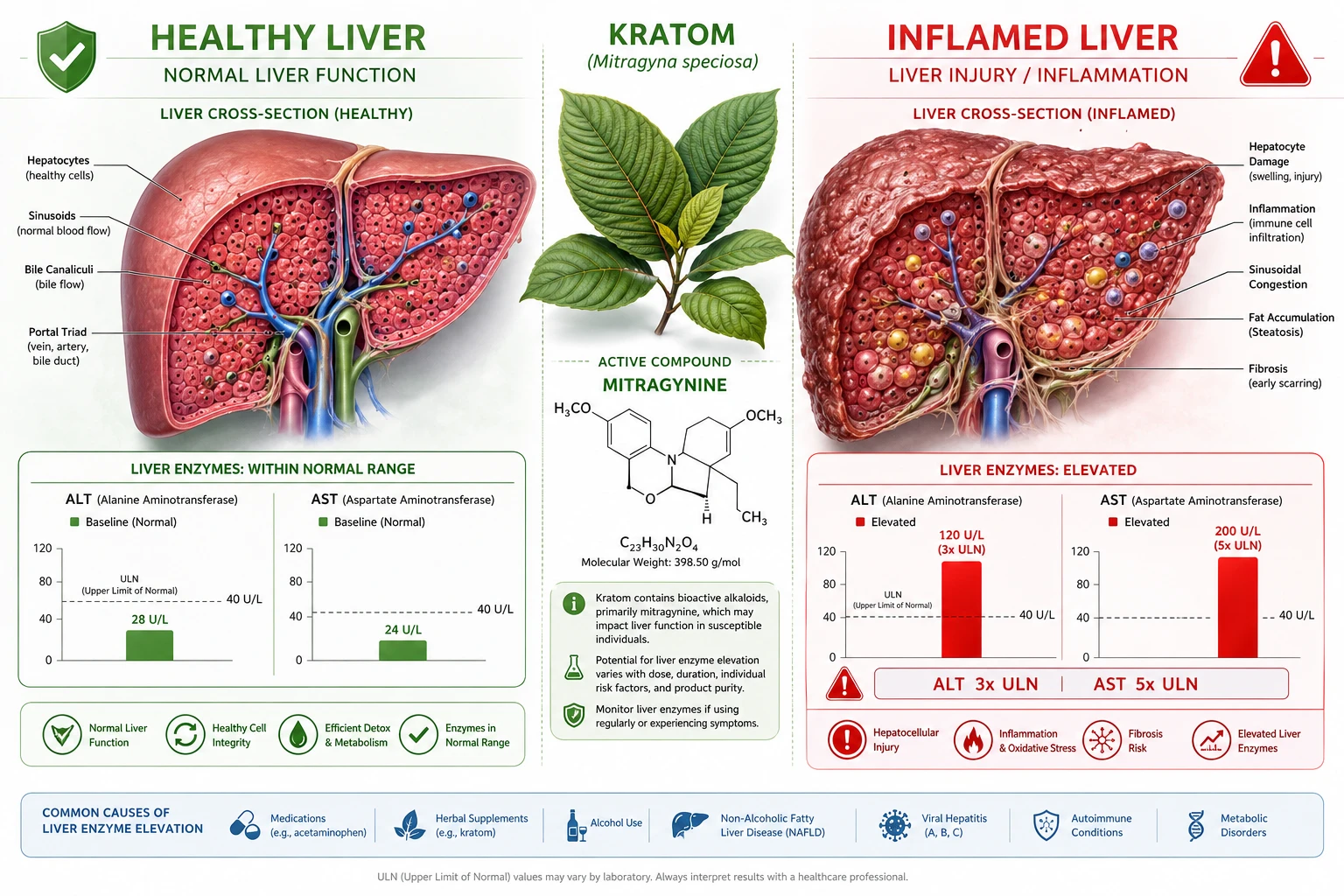
Kratom can be hard on the liver, but serious damage is relatively rare and typically linked to high doses, daily use, or individual genetic sensitivity. The liver processes kratom’s primary alkaloid, mitragynine, and elevated liver enzymes (ALT, AST) are the earliest warning sign. Most cases of kratom-induced liver injury appear within 1–8 weeks of heavy use. Early detection and stopping use can allow full recovery in many cases.
- How hard is kratom on the liver depends heavily on dose, frequency, and individual metabolism
- Elevated ALT and AST enzymes are the first measurable sign of liver stress from kratom
- Documented cases show a pattern of cholestatic hepatitis, not the same as alcohol-related liver damage
- Daily use above 8–10 grams per day carries the highest documented risk
- Symptoms include jaundice, dark urine, fatigue, and right-side abdominal pain
- Certain genetic variants (CYP3A4, CYP2D6 enzymes) make some users significantly more vulnerable
- Mixing kratom with alcohol or acetaminophen multiplies liver stress considerably
- Most mild-to-moderate cases resolve within 4–8 weeks after stopping kratom
- No strain has been proven definitively “safer” for the liver, but lower-alkaloid batches reduce total load
- Milk thistle, NAC (N-acetyl cysteine), and hydration support liver recovery during detox
Jack Botanicals - America's Trusted Kratom Source
AKA certified quality featuring Red Maeng Da, Red Bali, and Green Maeng Da. Lab-tested purity you can trust.
🎁 NEW CUSTOMER SPECIAL
JACK30 = 30% OFF
What Exactly Does Kratom Do to Liver Enzymes?
Kratom raises liver enzymes by forcing the liver to metabolize mitragynine and its byproducts, creating oxidative stress and, in some users, triggering an immune-mediated inflammatory response. The pattern most commonly seen is cholestatic hepatitis, meaning bile flow gets disrupted alongside cell damage.
Here’s what the data shows:
- ALT (alanine aminotransferase) rises first. It’s the most liver-specific marker.
- AST (aspartate aminotransferase) follows. Elevated AST alongside ALT suggests active hepatocyte damage.
- Alkaline phosphatase (ALP) and bilirubin elevate in cholestatic cases, causing the jaundice and dark urine users report.
- GGT (gamma-glutamyl transferase) rises with chronic use, signaling ongoing metabolic stress.
The liver uses CYP3A4 and CYP2D6 enzymes to break down mitragynine. When those pathways get overwhelmed, reactive metabolites build up. That’s when cell damage accelerates.
The pattern: Short-term, low-dose use shows minimal enzyme changes in most users. Sustained high-dose use is where the numbers start moving in the wrong direction.
How Much Kratom Can Cause Liver Damage?
There’s no universal threshold, but the cases documented in medical literature share a common profile: daily use, high doses, sustained over weeks to months.
The general risk breakdown:
| Daily Dose | Use Pattern | Liver Risk Level |
|---|---|---|
| 1–3 grams | Occasional (2–3x/week) | Low |
| 3–6 grams | Daily | Moderate (monitor enzymes) |
| 8–15 grams | Daily | High (documented damage cases) |
| 15+ grams | Daily | Very high (acute injury risk) |
Note: These ranges are based on reported case patterns in medical literature, not controlled clinical trials. Individual responses vary significantly.
Understanding safe kratom dosing facts matters here. Most liver injury cases involve users who escalated doses over time without tracking their intake. If you’re unsure how much you’re actually taking, check how many grams in a teaspoon of kratom to get accurate measurements before assuming your dose is low.
Common mistake: Users underestimate their dose because they measure by teaspoon, not grams. A heaped teaspoon can hit 4–5 grams easily.
Are Some People More at Risk for Kratom Liver Problems?
Yes, significantly. How hard is kratom on the liver isn’t the same for every user. Genetic and lifestyle factors create a wide range of individual vulnerability.
Higher-risk profiles:
- CYP3A4 or CYP2D6 poor metabolizers — these genetic variants slow mitragynine breakdown, letting reactive metabolites accumulate longer
- Pre-existing liver conditions (fatty liver, hepatitis B/C, cirrhosis)
- Regular alcohol users — alcohol competes for the same metabolic pathways
- Acetaminophen (Tylenol) users — both deplete glutathione, the liver’s main antioxidant
- People on multiple medications — drug-drug interactions through CYP450 enzymes
- Older adults (55+) — liver metabolic capacity declines with age
- Malnourished or low-protein diet users — reduced glutathione synthesis
Lower-risk profiles:
- Healthy adults under 45 with no liver history
- Occasional users keeping doses under 4 grams
- Users who cycle kratom (not daily)
🫀 Kratom Liver Risk Assessment
Answer 4 quick questions to estimate your personal liver risk level from kratom use.
Symptoms of Kratom-Related Liver Issues
Symptoms typically appear 1–8 weeks into heavy use, though some cases emerge faster with very high doses. How hard is kratom on the liver becomes visible through these warning signs:
Early symptoms (enzyme elevation stage):
- Unusual fatigue that doesn’t improve with rest
- Mild nausea, especially in the morning
- Loss of appetite
- Dull ache or pressure in the upper right abdomen
Progressed symptoms (active liver injury):
- Jaundice — yellowing of skin and whites of eyes
- Dark urine (tea or cola colored)
- Pale or clay-colored stools
- Intense itching (pruritus) from bile salt buildup
- Significant nausea and vomiting
⚠️ Stop immediately and get a liver panel if you notice jaundice or dark urine. These are not minor symptoms. They indicate active liver injury.
How Long Does It Take for Kratom to Harm Your Liver?
Most documented cases of kratom-induced liver injury develop within 2–8 weeks of sustained heavy use. Some acute cases have appeared in as little as 1–2 weeks at very high doses.
The timeline pattern:
- Week 1–2: Enzyme elevation begins (often asymptomatic)
- Week 3–6: Symptoms emerge if use continues
- Week 6–12: Peak injury in untreated cases
- After stopping: Most mild-moderate cases show improvement within 2–4 weeks
The key variable is dose frequency. Daily use at 10+ grams compresses this timeline considerably. Intermittent use at lower doses may show no measurable enzyme changes even over months.
Understanding how long kratom stays in your body matters here because mitragynine’s metabolites continue processing in the liver for hours after the effects wear off. The half-life of kratom averages 9–17 hours, meaning daily dosing doesn’t give the liver full recovery time between sessions.
Can Liver Damage from Kratom Be Reversed?
For most users who catch it early, yes. The liver has strong regenerative capacity, and mild-to-moderate kratom-induced liver injury is generally reversible once kratom use stops.
Recovery outlook by severity:
- Mild enzyme elevation (1–3x normal): Usually normalizes within 2–4 weeks of stopping
- Moderate injury (3–10x normal enzymes, jaundice): Recovery takes 4–12 weeks, may need medical monitoring
- Severe injury (acute liver failure pattern): Rare but documented; requires hospitalization and may not fully reverse
What supports recovery:
- Complete cessation of kratom
- Stopping alcohol completely during recovery
- Adequate protein intake (supports liver cell regeneration)
- N-acetyl cysteine (NAC) — replenishes glutathione (consult a doctor first)
- Milk thistle (silymarin) — some evidence for hepatoprotective effects
- Hydration and rest
What slows recovery:
- Continuing kratom even at reduced doses
- Alcohol use
- Acetaminophen use
- Starting new herbal supplements without medical guidance
What Do Medical Studies Say About Kratom and Liver Function?
The published literature on how hard is kratom on the liver is still limited but consistent in its findings. Case reports and case series form most of the evidence base as of 2026.
The pattern across documented cases:
- The injury type is predominantly drug-induced liver injury (DILI) with a cholestatic or mixed cholestatic-hepatocellular pattern
- Bilirubin elevations are common, explaining the jaundice seen in reported cases
- Most cases involved people using kratom daily for pain management or opioid withdrawal
- Recovery occurred in the majority of cases after kratom discontinuation
- A small subset of severe cases required corticosteroid treatment
What’s still unknown:
- The exact toxic metabolite responsible
- Whether specific alkaloid ratios (mitragynine vs. 7-hydroxymitragynine) drive different injury patterns
- Long-term liver effects of low-dose chronic use
The FDA has flagged kratom-related liver injury in its safety communications, and the American College of Gastroenterology has published case-based guidance recognizing kratom as a cause of DILI. No large-scale randomized controlled trials exist yet.
Do Certain Kratom Strains Cause Less Liver Stress?
Here’s the thing: no strain has been clinically proven to be safer for the liver than another. But alkaloid concentration does matter, and strains vary in mitragynine content.
The logic:
- Higher mitragynine content = more metabolic load per gram
- Lower-alkaloid batches at the same gram dose = less liver processing required
- Fermented strains (yellow, gold) may have altered alkaloid profiles, but this isn’t consistently documented
Practical comparison:
| Strain Type | Typical Mitragynine Range | Relative Alkaloid Load |
|---|---|---|
| White vein | 1.3–1.8% | Higher |
| Red vein | 0.8–1.4% | Moderate |
| Green vein | 1.0–1.6% | Moderate |
| Yellow/Gold | 0.7–1.2% (estimated) | Lower (unverified) |
Note: These ranges are estimates based on available lab testing data from vendors. Actual content varies by batch and vendor.
The takeaway: buying from vendors who publish third-party lab certificates of analysis (COA) lets you compare actual mitragynine percentages. A batch at 0.9% mitragynine delivers less alkaloid load than one at 1.7% at the same gram dose. That difference matters for liver stress over time.
For strain-specific profiles, the Green Maeng Da kratom effects guide covers alkaloid data worth reviewing before choosing a daily strain.
Can You Drink Alcohol with Kratom Without Liver Risks?
No. Combining alcohol with kratom is one of the clearest ways to increase liver stress. Both substances are processed through overlapping liver enzyme pathways (CYP3A4), and both deplete glutathione.
What happens when you combine them:
- The liver prioritizes alcohol metabolism, slowing kratom processing
- Mitragynine metabolites stay in circulation longer
- Oxidative stress compounds from both substances simultaneously
- Risk of nausea, vomiting, and cardiovascular stress also increases
Even moderate alcohol use (1–2 drinks) on the same day as kratom use adds measurable metabolic burden. Regular combined use is documented in several kratom DILI case reports as an aggravating factor.
Bottom line: If liver health is a concern, alcohol and kratom should not be used together. Period.
Is Kratom Safer Than Other Herbal Supplements for Liver Health?
Compared to some herbal supplements, kratom’s liver risk profile is similar or slightly higher. It’s not uniquely dangerous, but it’s not benign either.
Comparison:
| Supplement | Liver Risk Level | Notes |
|---|---|---|
| Kratom | Moderate | Cholestatic DILI documented |
| Kava | Moderate-High | Well-documented hepatotoxicity |
| Green tea extract (high dose) | Moderate | DILI cases documented |
| Black cohosh | Low-Moderate | Rare DILI cases |
| Milk thistle | Very Low | Actually hepatoprotective |
| Valerian | Low | Rare cases only |
Kava carries a higher documented hepatotoxicity risk than kratom in the published literature. However, kratom’s risk is real and not theoretical. The comparison doesn’t make kratom safe — it just provides context.
Warning Signs You Should Stop Taking Kratom
Stop use and get a liver function test if you notice any of the following:
- 🟡 Yellowing of skin or eyes (jaundice)
- 🟤 Dark urine (tea or cola colored)
- ⬜ Pale or gray stools
- 🔴 Upper right abdominal pain lasting more than a few days
- 😴 Extreme fatigue not explained by other causes
- 🤢 Persistent nausea or loss of appetite lasting more than a week
- 🔶 Skin itching without rash
Any single symptom from this list warrants stopping kratom immediately and seeing a doctor. Don’t wait for multiple symptoms to appear.
How to Detox from Kratom If You’re Worried About Liver Damage
If liver damage is a concern, a supervised, gradual taper is safer than abrupt cessation, especially for daily heavy users. Abrupt stopping can cause withdrawal symptoms that add physical stress.
Step-by-step detox approach:
- Get a liver panel first. Know your baseline ALT, AST, ALP, and bilirubin before starting.
- Taper dose by 10–20% every 5–7 days. Don’t drop too fast.
- Stop alcohol completely during the entire detox period.
- Hydrate well — 2–3 liters of water daily supports kidney and liver clearance.
- Add NAC or milk thistle after consulting a healthcare provider.
- Retest liver enzymes at 2 weeks and 4 weeks after stopping.
- Seek medical support if symptoms worsen or jaundice appears.
For detailed tapering methods, the guide on how to stop kratom safely covers the full process with practical steps. Also, reviewing how to consume kratom powder safely can help users who want to reduce risk while still using.
Alternatives to Kratom That Are Gentler on the Liver
If liver health is a primary concern, several alternatives carry lower documented hepatotoxicity risk:
- Magnesium glycinate — for sleep and muscle relaxation
- L-theanine — for calm focus without stimulant load
- Ashwagandha (low dose) — adaptogenic stress support (rare DILI cases at very high doses)
- CBD (cannabidiol) — pain and anxiety support; liver concerns mainly at very high pharmaceutical doses
- Corydalis extract — traditional pain support with lower hepatotoxicity profile than kratom
- Physical therapy and exercise — for chronic pain management without any liver burden
None of these fully replicate kratom’s alkaloid-driven effects. But for users whose liver panels are already showing elevation, reducing or eliminating kratom and substituting lower-risk options is the medically sound path.
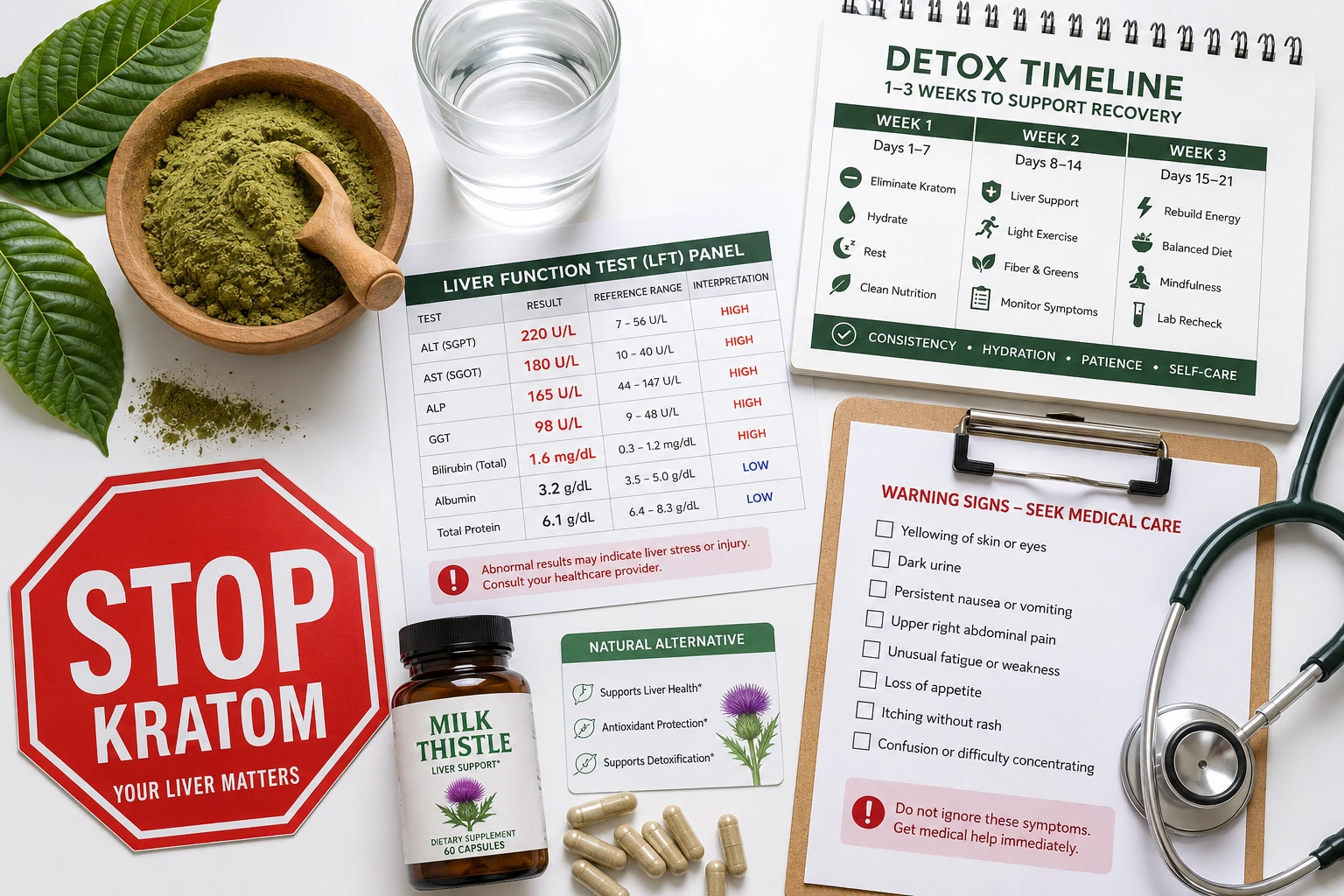
Alternatives to Kratom That Are Gentler on the Liver
For users who need to step back from kratom due to liver concerns, several options carry lower documented hepatotoxicity profiles. How hard is kratom on the liver compared to these alternatives is a legitimate question worth answering directly.
Magnesium glycinate handles sleep and muscle tension without any liver processing burden. L-theanine supports calm focus. Low-dose ashwagandha (under 300mg/day) provides adaptogenic stress relief with a much lower DILI risk than kratom at comparable doses.
For pain management specifically, CBD isolate at moderate doses (under 50mg/day) shows minimal liver impact in healthy adults. Physical therapy combined with anti-inflammatory dietary changes addresses chronic pain without any hepatotoxic risk.
The pattern from users who’ve transitioned away from kratom due to liver concerns: the hardest part is replacing kratom’s energy and mood effects, not the pain relief. Yellow vein kratom effects tend to be milder than white or green strains, making it a useful intermediate step during a taper before switching to non-kratom alternatives entirely.
How Hard Is Kratom on the Liver – FaQs
Does kratom affect the liver?
Current research on kratom and liver health is limited and not fully conclusive. Some reports suggest possible changes in liver enzymes in certain users, while others show no noticeable effects. Because of multiple influencing factors, including health history and product quality, the overall impact on the liver is still being studied.
Can kratom cause liver damage?
Some rare case reports have described liver-related issues associated with kratom use, but a direct cause-and-effect relationship has not been clearly established. Factors such as other substances, existing conditions, and product variability may also play a role. Overall, evidence remains limited and not definitive.
What are signs of liver stress from kratom use?
Possible signs of liver stress reported in general contexts may vary between individuals and are not specific only to kratom use.
- Unusual fatigue or low energy levels
- Yellowing of the skin or eyes in some cases
- Dark-colored urine or pale stool changes
- Discomfort in the upper abdominal area
- Loss of appetite or general unease
Who may have higher liver risk with kratom?
Some individuals may have higher sensitivity related to liver function based on different health and lifestyle factors.
- People with existing liver conditions
- Individuals using higher or frequent doses
- Long-term or repeated users over time
- Those consuming alcohol regularly
- Users taking multiple substances or supplements together
Does kratom interact with liver enzymes or medications?
Kratom has been discussed in relation to liver enzyme activity, particularly enzymes involved in drug metabolism. It may interact with certain medications or substances processed by the liver.
- Medications metabolized through liver enzyme pathways
- Herbal supplements with similar metabolic effects
- Alcohol consumption alongside kratom use
- Common pain relievers processed by the liver
- Substances affecting CYP450 enzyme activity
How common are liver problems linked to kratom?
Liver-related issues associated with kratom appear to be rare based on available reports. However, the total number of cases is unclear due to limited research and possible underreporting. Differences in product quality, dosage, and individual health conditions make it difficult to determine how frequently such effects may occur.
Can stopping kratom improve liver-related issues?
In some reported cases, discontinuing kratom use has been associated with improvement in liver-related symptoms or markers. However, outcomes can vary depending on individual health factors and other contributing causes. Because evidence is still limited, recovery experiences are not consistent across all situations.
Conclusion
How hard is kratom on the liver depends on dose, frequency, and individual genetics. Daily use above 8 grams carries real documented risk. Catch enzyme elevation early, stop use if symptoms appear, and give the liver time to recover. Most cases resolve with cessation and proper support.
Kratom’s impact on liver health is dose-dependent and varies widely between individuals. Most research and case reports point to risk increasing with daily, high-dose, or prolonged use, especially without monitoring liver enzymes.
Early warning signs like elevated ALT/AST, fatigue, and jaundice highlight the importance of timely detection. Documented cases suggest that stopping kratom early significantly improves recovery outcomes and reduces long-term liver complications.
While no strain is proven completely safe, risk can be minimized through lower doses, avoiding alcohol, and using lab-tested products. For anyone concerned about liver health, cautious use and regular medical monitoring remain essential for safety overall.
David is an ethnobotany enthusiast who has spent years studying the role of plants in both ancient and modern communities. His curiosity has taken him from libraries filled with old manuscripts to landscapes where indigenous traditions still thrive. David enjoys connecting the dots between the past and present, showing how nature continues to inspire human life. His work emphasizes thoughtful exploration, cultural respect, and the joy of discovering connections in the natural world.