Premium Kratom - AKA Certified Quality
Red Maeng Da • Red Bali • Green Maeng Da - All lab-tested for purity
💰 EXCLUSIVE DISCOUNT
Code: JACK30 = 30% OFF
How much kratom is too much depends on body weight, tolerance, product type, and whether other substances are involved. For most adults, doses above 8 grams carry a sharply elevated risk of serious side effects. Concentrated extracts and 7-hydroxymitragynine (7-OH) products can trigger overdose-like reactions at far smaller volumes than raw leaf powder.
- Doses above 8g of raw leaf powder are widely considered high-risk; anything above 12g is associated with severe adverse effects
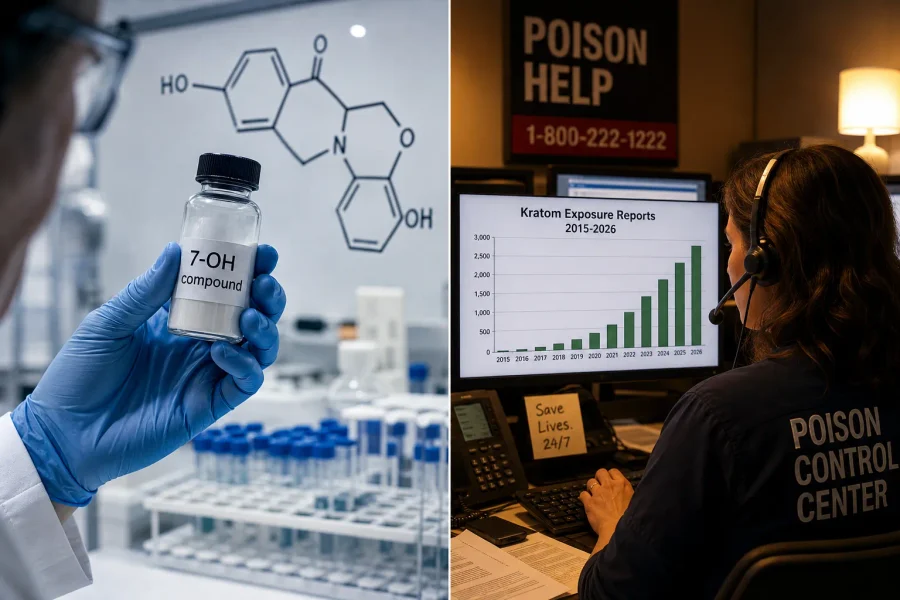
- U.S. poison centers recorded 3,434 kratom exposure reports in 2025 alone, up from 258 in 2015, a roughly 1,200% increase [3]
- From 2015 to 2025, CDC identified 7,287 serious medical outcomes and 233 kratom-associated deaths, with 79% involving multiple substances [3]
- Concentrated 7-OH products carry opioid-like overdose risk including respiratory depression, reversible with naloxone [2]
- The FDA has no approved use for kratom and warns against all consumption [1]
- Kratom tolerance builds fast, pushing users toward higher doses and greater risk
- Mixing kratom with alcohol, benzodiazepines, or opioids dramatically increases the chance of serious harm [3]
- Hospitalizations for kratom alone rose from 43 in 2015 to 538 in 2025 [8]
What Is a Safe Kratom Dose for Beginners
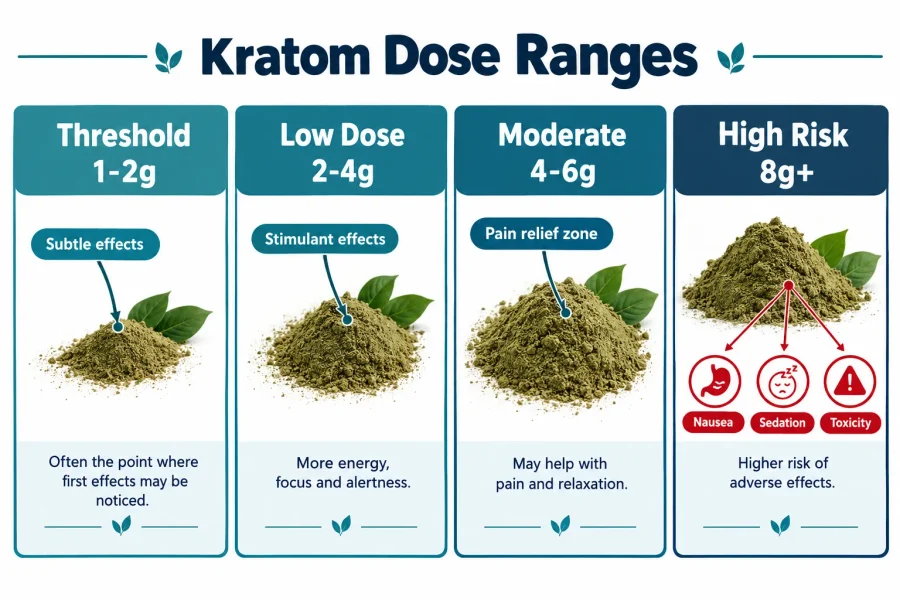
For a first-time user, 1 to 2 grams of plain leaf powder is the threshold range. Effects are mild, and the risk of adverse reactions stays low. Going straight to 5 or 6 grams with zero tolerance is one of the most common mistakes new users make.
Here’s the breakdown by experience level:
Jack Botanicals - America's Trusted Kratom Source
AKA certified quality featuring Red Maeng Da, Red Bali, and Green Maeng Da. Lab-tested purity you can trust.
🎁 NEW CUSTOMER SPECIAL
JACK30 = 30% OFF
| Experience Level | Dose Range | Expected Effect |
|---|---|---|
| First-time | 1-2g | Mild stimulant, alertness |
| Low tolerance | 2-4g | Moderate energy or calm |
| Moderate tolerance | 4-6g | Pain relief, sedation |
| High tolerance | 6-8g | Strong sedation, nausea risk |
| Danger zone | 8g+ | Vomiting, toxicity, serious harm |
The pattern is clear: start low, wait 30 to 45 minutes before deciding to redose. Powder potency varies by batch and vendor, so a dose that felt moderate last month may hit harder with a new supply.
For a deeper look at safe starting points, see how much kratom do you take: safe dosing facts explained.
Kratom Dose Risk Estimator
How Much Kratom Is Too Much in a Single Day
Most experienced users cap daily use at 12 to 15 grams split across multiple doses. Anything beyond that range in a single day pushes into territory where adverse effects compound quickly.
The FDA has not established an official daily limit because it does not recognize kratom as safe for any use [1]. Community-derived guidelines suggest:
- Single dose maximum: 6 to 8g for experienced users
- Daily total maximum: 12 to 15g across 2 to 3 doses
- Redose gap: Minimum 4 to 6 hours between doses
Turns out, the bigger risk is not a single large dose but stacking multiple moderate doses throughout the day. That pattern accelerates tolerance and raises cumulative alkaloid load in the bloodstream.
For a full breakdown of daily limits, the guide on how much kratom can you take easily covers this in detail.
I Experienced How Much Kratom Is Too Much?
I learned this the hard way about six months in. At 3g I felt focused and calm — my sweet spot. One evening I pushed to 9g thinking more would be better. Bad idea — nausea hit within 30 minutes, followed by dizziness and a splitting headache that lasted hours.
Most experienced users I know stay under 5g per session for a reason.
Downsides of going too high: nausea is almost guaranteed past 7–8g, tolerance builds aggressively with frequent use, and physical dependence is a real documented risk — not something to brush off.
What Happens If You Take Too Much Kratom
Taking too much kratom triggers a predictable cascade of effects. At doses above 8 grams, most users report nausea, dizziness, and vomiting. At higher doses or with concentrated products, the risk escalates to seizures, liver stress, and in rare cases, death.
Mild overdose symptoms (6-9g range):
- Nausea and vomiting
- Dizziness and loss of coordination
- Rapid heart rate
- Excessive sweating
Severe overdose symptoms (10g+ or concentrated extract):
- Seizures
- Extreme sedation or unconsciousness
- Respiratory depression (primarily with 7-OH products)
- Liver toxicity signs: jaundice, dark urine, abdominal pain
The FDA specifically flagged OPMS Black Liquid Kratom extract as linked to serious adverse effects including death. Concentrated extracts are not equivalent to raw powder. A 15mL liquid extract can deliver alkaloid loads far exceeding a 5g powder dose.
Kratom Overdose Symptoms: What to Look For
Kratom overdose symptoms differ from classic opioid overdose in one key way: raw leaf mitragynine does not typically cause the respiratory depression that kills opioid users. However, 7-OH does cause respiratory depression and responds to naloxone [2].
Warning signs that require immediate medical attention:
- Unconsciousness or inability to wake the person
- Slow, shallow, or stopped breathing
- Blue-tinted lips or fingernails (cyanosis)
- Seizure activity
- Severe vomiting with no ability to protect the airway
- Jaundice (yellowing of skin or eyes)
If someone is unresponsive after kratom use, call 911 immediately. If 7-OH products were involved, naloxone (Narcan) may reverse respiratory depression [2]. Do not wait to see if symptoms improve on their own.
The question of how much kratom is too much becomes most urgent when these symptoms appear. At that point, dose amounts are irrelevant. Get emergency help.
Can You Build Tolerance to Kratom
Yes, and it happens faster than most users expect. Tolerance to kratom’s effects typically develops within 2 to 4 weeks of daily use. The result is a creeping dose escalation that pushes users deeper into the danger zone.
Here’s the thing: tolerance is not just about needing more to feel the same effect. It also means the body’s warning signals (nausea, dizziness) get suppressed, so users take doses that would have floored them as beginners without noticing the danger.
Tolerance reduction strategies that work:
- Rotate strains every 3 to 5 days (green, red, white alternation)
- Take at least 2 consecutive days off per week
- Taper dose by 0.5g every 5 to 7 days if use has escalated
- Avoid daily use for more than 3 consecutive weeks
For a structured approach to reducing use, the guide on how to wean off kratom safely provides a practical tapering framework.
Kratom Daily Limit Recommendations by Body Weight
Body weight influences how alkaloids distribute and clear from the system. Heavier individuals generally process kratom faster, but this does not mean higher doses are automatically safe.
General weight-based starting guidelines (raw leaf powder only):
- Under 68kg (150 lbs): Keep single doses at 2 to 4g; daily total under 8g
- 68 to 90kg (150-200 lbs): Single doses up to 5g; daily total under 12g
- Over 90kg (200 lbs): Single doses up to 6g; daily total under 15g
These are conservative estimates, not prescriptions. Product potency, mitragynine percentage (which varies from roughly 0.5% to 1.8% across batches), and individual liver metabolism all shift these numbers. If a vendor’s lab report shows 1.5% mitragynine, that batch hits harder than one at 0.8%.
For specifics on capsule dosing, check how much kratom is in a capsule: facts and how many mg of kratom is safe.
Is Kratom Safe to Take Every Day
No credible safety data supports daily long-term kratom use. The FDA states kratom has no approved medical use and is not proven safe or effective [1]. Daily use accelerates tolerance, raises dependence risk, and increases cumulative exposure to alkaloids that stress the liver.
CDC data from 2026 shows hospitalizations after kratom use alone rose from 43 in 2015 to 538 in 2025 [8]. Reports of serious health effects or death from kratom alone climbed from 76 to 919 over the same period [8].
Bottom line: daily use is not a safe pattern regardless of dose. Users who rely on kratom daily for pain or mood management should consult a healthcare provider about alternatives.
Kratom Side Effects From Too Much Use and Kratom vs. Other Substances: Overdose Risk
Side effects from excessive kratom use include:
- Liver damage (hepatotoxicity): documented in case reports, flagged by FDA [1]
- Seizures: reported in both single high-dose and chronic use cases
- Dependence and withdrawal: restlessness, body aches, insomnia, cold sweats
- Hair loss: associated with prolonged heavy use (see why does kratom cause hair loss)
- Gastrointestinal distress: constipation, nausea, appetite loss
Comparison with other substances:
Raw kratom leaf does not cause the same respiratory depression as opioids. That distinction matters. However, 7-OH products behave more like opioids and carry similar overdose physiology [2]. Mixing kratom with opioids, benzodiazepines, or alcohol removes that relative safety margin entirely. CDC data shows 60% of multiple-substance kratom exposure reports led to serious outcomes in 2025 [3].
Kratom’s overdose risk profile sits somewhere between caffeine (low acute lethality) and opioids (high acute lethality), but concentrated extracts and polydrug combinations push it firmly toward the higher-risk end.
Can Kratom Cause Liver Damage
Yes. Kratom-associated liver injury (hepatotoxicity) is documented and flagged by the FDA as a serious risk [1]. Symptoms include jaundice, dark urine, fatigue, and abdominal pain. Most reported cases involve heavy or prolonged use, but isolated cases after shorter exposure periods exist.
The takeaway: anyone using kratom regularly should watch for liver-related symptoms. If jaundice or dark urine appears, stop use and seek medical evaluation immediately.
How Long Does Kratom Stay in Your System
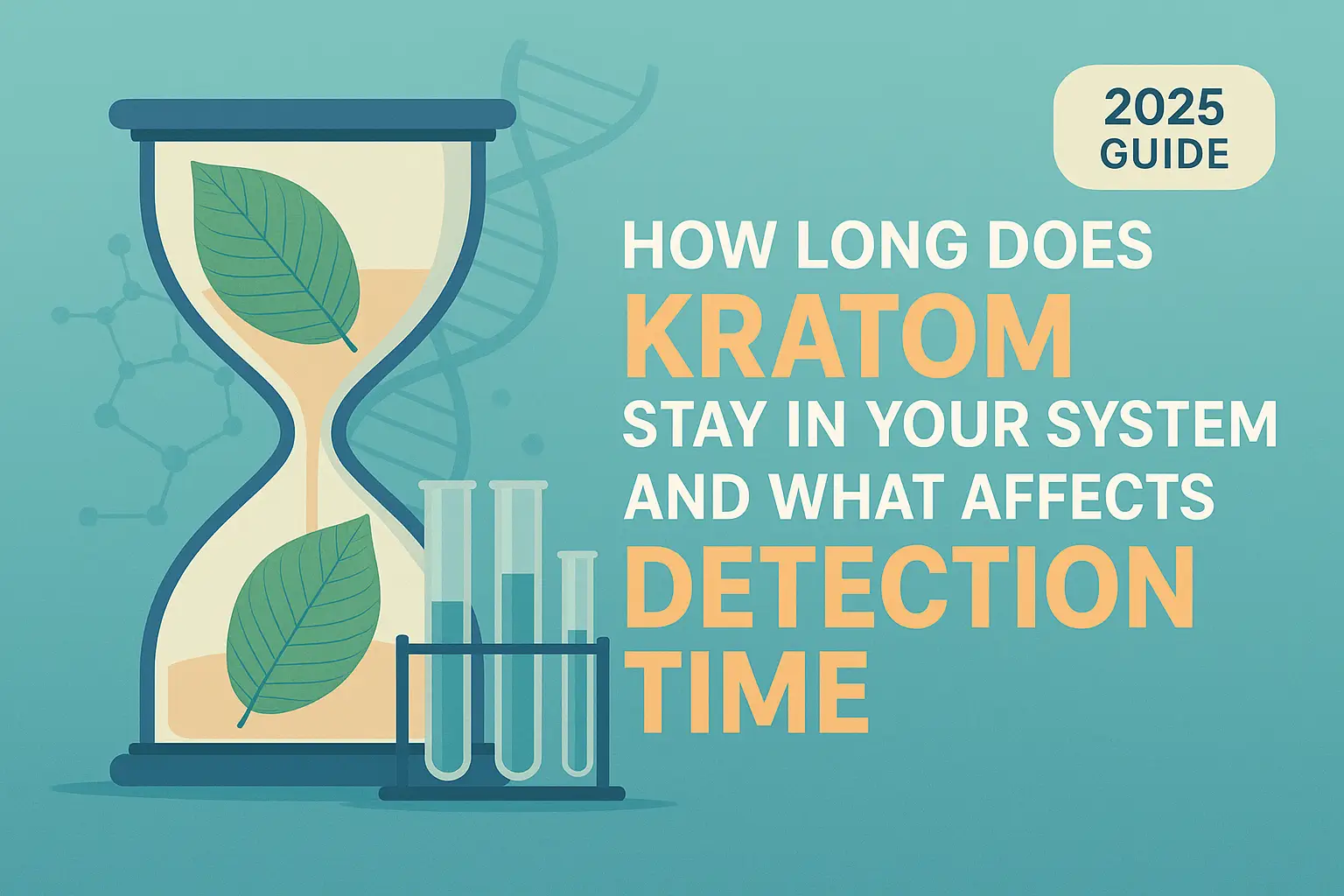
Mitragynine has a half-life of roughly 9 to 17 hours, meaning it takes 2 to 4 days to clear from the body for most users. Heavy or chronic users may retain detectable levels for up to 9 days.
This matters for overdose risk because redosing before the previous dose clears can stack alkaloid levels higher than intended. For a full clearance timeline, see how long does kratom stay in your body.
Best Kratom Dosage for Pain Relief
For pain relief, the effective range is typically 4 to 6 grams of red vein powder. Red strains like Red Bali or Red Borneo are the most commonly reported choices for analgesic effects. Going above 6 grams for pain does not proportionally increase relief but does sharply increase side effect risk.
Users report that which kratom is best for chronic pain often comes down to strain selection as much as dose. A well-sourced red vein at 4g typically outperforms a poorly sourced one at 8g.
How to Reduce Kratom Tolerance
The most effective approach is a structured taper combined with strain rotation. Testing reveals that abrupt cessation after heavy use triggers withdrawal symptoms that push users back to high doses within days.
Step-by-step tolerance reset:
- Reduce current dose by 0.5g every 5 days
- Rotate between two or three strains on alternating days
- Take two consecutive days off per week from the start
- Hydrate heavily and maintain consistent sleep
- Once at 2g or below, take a full 7-day break
For a complete stopping protocol, how to stop kratom safely: tapering methods and support tips walks through each stage.
Kratom Interactions With Medications and Supplements
Kratom interacts with a wide range of substances. These interactions are where how much kratom is too much becomes a moving target, because a dose that is safe alone may become dangerous in combination.
High-risk combinations:
- Opioids: Additive CNS depression; risk of respiratory failure
- Benzodiazepines: Compounded sedation; 60% of combined-substance exposures led to serious outcomes in 2025 [3]
- Alcohol: Increased toxicity and impaired judgment around redosing
- MAOIs: Risk of serotonin syndrome
- Stimulants (cocaine, amphetamines): Cardiovascular stress
- Kava: By 2025, kratom was involved in 30% of all kava-related poison center reports [4]
Moderate-risk combinations:
- Blood thinners (warfarin): Kratom may affect clotting
- Antidepressants (SSRIs, SNRIs): Potential serotonin interaction
- Liver-metabolized medications (CYP3A4 substrates): Kratom may slow clearance
Always disclose kratom use to a prescribing physician before starting any new medication.
How Much Kratom Is Too Much – FAQs
How much kratom is too much?
There is no single amount that is considered too much for everyone because kratom products can vary in strength and alkaloid content. Taking more than intended can increase the chance of unwanted effects. Important factors include product concentration, individual sensitivity, frequency of use, and whether kratom is combined with other substances.
What are signs that someone has taken too much kratom?
Taking more kratom than intended may cause noticeable changes in how a person feels or functions. Possible warning signs can include:
- Nausea or vomiting
- Dizziness or unusual drowsiness
- Confusion or difficulty staying alert
- Changes in coordination
Can taking kratom more often become a problem?
Frequent kratom use can increase the likelihood of tolerance, meaning a person may feel that the same amount has less effect over time. Some people may also experience unwanted effects when they stop regular use. Keeping track of how often kratom is used can help identify patterns of increasing frequency or reliance.
Does kratom strength affect how much is too much?
Yes. Kratom products can differ substantially in concentration, especially powders, extracts, capsules, shots, and other concentrated products. The amount of plant material alone does not always describe the strength of a product. Product labeling, serving information, and independent laboratory testing can provide additional information about its contents.
What should you do if you think you took too much kratom?
If someone has taken more kratom than intended, avoid taking additional kratom or mixing it with other substances. Keep the product packaging available so its contents can be identified. If the person is difficult to wake, having trouble breathing, having a seizure, or otherwise seriously unwell, seek emergency medical assistance immediately.
Can mixing kratom with other substances increase the risks?
Combining kratom with other substances can make its effects less predictable. Particular caution is appropriate when other substances can cause drowsiness or affect alertness. Avoid assuming that combining products is safe simply because each substance is used separately. If an unexpected or severe reaction occurs, seek appropriate medical assistance.
How can you avoid taking more kratom than intended?
Careful product handling can reduce the chance of accidentally taking more than planned. Helpful practices include:
- Read the product label before use.
- Measure consistently rather than estimating.
- Keep track of how often you use it.
- Avoid combining it with other substances.
Conclusion
The data on how much kratom is too much is no longer ambiguous. Poison center reports have surged 1,200% since 2015, hospitalizations have risen more than tenfold, and 233 deaths have been recorded over a decade, with the majority involving multiple substances [3][8]. Raw leaf at low doses carries a different risk profile than concentrated 7-OH extracts, but neither category is without documented harm.
The practical limits are clear: stay under 6 grams per dose, keep daily totals below 12 to 15 grams, never combine kratom with opioids or benzodiazepines, and avoid daily use patterns that accelerate tolerance. Concentrated extracts and 7-OH products require an entirely different level of caution given their opioid-like pharmacology [2].
References
[1] FDA and Kratom – https://www.fda.gov/news-events/public-health-focus/fda-and-kratom
[2] FDA Takes Steps to Restrict 7-OH Opioid Products Threatening American Consumers – https://www.fda.gov/news-events/press-announcements/fda-takes-steps-restrict-7-oh-opioid-products-threatening-american-consumers
[3] CDC MMWR Kratom Exposure Report – https://www.cdc.gov/mmwr/volumes/75/wr/mm7511a1.htm
[8] Kratom Poison Call Center Analysis – https://www.latimes.com/california/story/2026-04-17/kratom-poison-call-center-analysis
[4] CDC MMWR Kava and Kratom Co-Use Data – https://www.cdc.gov/mmwr/volumes/75/wr/mm7512a1.htm
David is an ethnobotany enthusiast who has spent years studying the role of plants in both ancient and modern communities. His curiosity has taken him from libraries filled with old manuscripts to landscapes where indigenous traditions still thrive. David enjoys connecting the dots between the past and present, showing how nature continues to inspire human life. His work emphasizes thoughtful exploration, cultural respect, and the joy of discovering connections in the natural world.